Blog

Workplace operations insights

Practical guides for office managers building better hybrid workplaces. Learn how to optimize space utilization, automate operations, and support distributed teams.

Get workplace operations insights in your inbox

Subscribe for monthly guides on hybrid work management, space optimization, and workplace automation.

Oops! Something went wrong while submitting the form.
Office Insights

Workplace Safety in the Office: Legal Obligations, Ergonomics and Prevention

Workplace safety in the office serves to maintain employee health and provide legal protection for employers. In modern hybrid offices, safety places new demands on the organization of desk sharing and mobile work.

Workplace Safety in the Office: Key Takeaways

  • Legal framework for workplace safety in the office: The foundation consists of the Occupational Safety Act (ArbSchG), the Workplace Ordinance (ArbStättV) and DGUV Information 215-410.
  • Risk assessment in the office: The employer must identify and document the risks (physical and psychological) for each workplace.
  • Ergonomics: Desks, chairs and monitors must be adjustable to prevent musculoskeletal disorders.
  • Personnel: Depending on company size, safety officers, first aiders and fire safety assistants must be appointed in the required numbers.
  • Safety briefings: At least once a year, all employees must be instructed on the hazards and protective measures in the workplace.

What legal regulations apply to workplace safety in the office?

Workplace safety in the office is primarily governed by the Occupational Safety Act (ArbSchG) and the Workplace Ordinance (ArbStättV), which are further specified by DGUV Information 215-410.

These regulations require employers to systematically assess hazards, comply with technical standards for computer workstations and ensure employee safety through regular briefings and the provision of first aiders.

  • Occupational Safety Act (ArbSchG): It forms the foundation and obliges the employer under § 5 to conduct a risk assessment. The goal is to design work in such a way that hazards to life and physical and mental health are avoided.
  • Workplace Ordinance (ArbStättV): It defines minimum requirements for the operation of workplaces. This includes aspects such as room temperature, ventilation, lighting and the design of computer workstations.
  • DGUV Information 215-410 (formerly BGI 650): This guideline from the German Social Accident Insurance is the most important practical standard for offices. It contains detailed requirements for ergonomics, floor space and the safety-related design of work equipment.
  • Display Screen Equipment Regulation (now part of ArbStättV): It sets specific requirements for the quality of monitors, keyboards and software ergonomics to prevent strain on the eyes and musculoskeletal system.

Responsibility and Implementation of Workplace Safety in the Office

The employer is solely responsible for compliance with and implementation of all measures. For support, from the very first employee, the employer is required to provide proof of safety engineering and occupational health care (according to ASIG and DGUV Regulation 2).

Occupational safety specialists (Sifa) and company physicians provide advisory services, but keeping escape routes clear or correctly adjusting office furniture falls under the responsibility of the respective managers or office management.

How is a risk assessment created for office workplaces?

The risk assessment is the required tool for identifying risks to employee health and initiating countermeasures. According to § 5 of the Occupational Safety Act, every employer is obliged to conduct this assessment for all workplaces, document it and update it regularly.

  1. Define work areas: Divide the office into meaningful units, for example individual offices, open spaces, meeting rooms.
  2. Identify hazards: Record all physical and psychological stresses.
  3. Assess hazards: Evaluate the risk (probability of occurrence and severity of potential damage).
  4. Define protective measures: Select appropriate measures according to the TOP principle (Technical before Organizational before Personal).
  5. Implement measures: Carry out the planned improvements.
  6. Check effectiveness: Verify whether the measures have actually reduced the risk.
  7. Document and update: Legally compliant documentation of results and adaptation when changes occur (e.g. new office furniture or software).

Consideration of Psychological Stress in the Office

Since 2013, the Occupational Safety Act has explicitly required that the psychological risk assessment must also be part of the process. In the office, the focus is on factors such as work intensification, constant availability, lack of recovery periods or inadequate work organization. The goal is the prevention of stress-related illnesses and burnout.

Special Case: Risk Assessment for Hybrid Work (Office/Home Office)

Due to the alternation between office and home office, the assessment must extend beyond time spent in the office. The employer must also consider hazards for working from home and on the go. Since the employer has no direct right of inspection in the private space of employees, this is done through self-assessment questionnaires and instructions for the ergonomic design of the home workplace.

What ergonomic requirements must office workplaces meet?

Workplace ergonomics aims to adapt working conditions to the physical characteristics of people. The overarching goal is to prevent improper strain and chronic musculoskeletal disorders .

DGUV Information 215-410 and the standards DIN EN 527-1 (desks) and DIN EN 1335 (office chairs) define exact minimum requirements for this purpose.

The Ergonomic Office Chair

A suitable chair must allow dynamic sitting and be individually adjustable:

  • Seat height: The thighs should slope slightly downward, with feet flat on the floor (knee angle approx. 90° or slightly more).
  • Backrest: It must have lumbar support that supports the natural curvature of the spine in the lower back area.
  • Dynamics: The backrest should be movable (synchronous mechanism) to encourage alternating between leaning forward and backward.

The Office Desk

The desk must provide sufficient space for work equipment and the correct working height:

  • Dimensions: The standard surface area is 160 x 80 cm. A depth of at least 80 cm is necessary to maintain the viewing distance to the monitor.
  • Height: For fixed desks, the standard measurement is 74 cm (± 2 cm). However, height-adjustable sit-stand desks (switching between 65 cm and 125 cm) are ideal for reducing cardiovascular strain.
  • Surface: It must be low-reflection and matte to avoid glare from light sources.

Monitor and Input Devices for the Office

The placement of technology affects the strain on neck and eyes:

  • Viewing distance: Depending on monitor size, this should be between 50 cm and 70 cm.
  • Viewing angle: The top line on the screen should be well below eye level, so that the gaze is slightly tilted downward.
  • Arrangement: The monitor must be positioned directly in front of the user (no twisted posture). Keyboard and mouse should be placed so that the forearms can rest relaxed on the desk.

Light, Noise and Climate in the Office

  • Lighting: For office work, an illuminance of at least 500 lux is required. Natural daylight is preferred, while glare must be prevented using blinds.
  • Noise: The sound pressure level should not exceed 55 dB(A) for predominantly mental tasks.
  • Indoor climate: The recommended room temperature is between 20°C and 22°C. The relative humidity should be between 40% and 60%.

How many first aiders and safety officers do I need for the office?

The number of persons to be appointed for occupational safety is legally defined and depends on the number of insured persons present in the workplace according to DGUV Regulation 1.

  • First aiders: In offices with up to 20 employees present, one first aider must be appointed. From 21 employees onwards, at least 5% of the workforce must be trained as first aiders.
  • Safety officers (SiBe): From a company size of 20 employees, the appointment of at least one safety officer is mandatory. They support the employer on a voluntary basis in accident prevention.
  • Fire safety assistants: Here too, a quota of typically 5% of employees applies. Find all details about training and equipment for fire safety in the office.

Important for planning: The employer must ensure through vacation and sick leave periods as well as hybrid work models that the required number of helpers are physically present in the office at all times.

How is workplace safety implemented in the office with desk sharing and hybrid work?

The introduction of work models such as desk sharing and hybrid work fundamentally changes the requirements for occupational safety. Companies must ensure that the protection goals of the Workplace Ordinance (ArbStättV) are also achieved with daily user changes and in the home office.

  • Ergonomics: Since every employee has different physical requirements, shared workplaces (shared desks) must be versatile and easily adjustable.
  • Space utilization and capacities: In open-space concepts, there is a risk of overcrowding, which increases noise levels and can undermine escape route concepts.
  • Psychological stress: The uncertainty of not finding an adequate workplace in the morning ("desk hunting") creates additional stress and reduces concentration.
  • Hygiene: Frequent user changes require hygiene rules and adapted cleaning cycles.

How does booking software help with workplace safety and health in the office?

PULT is our software for workplace and room booking as well as automated presence detection. It serves many employers as a platform to fulfill their duty of care. The software includes features for ergonomics, emergency management and health protection:

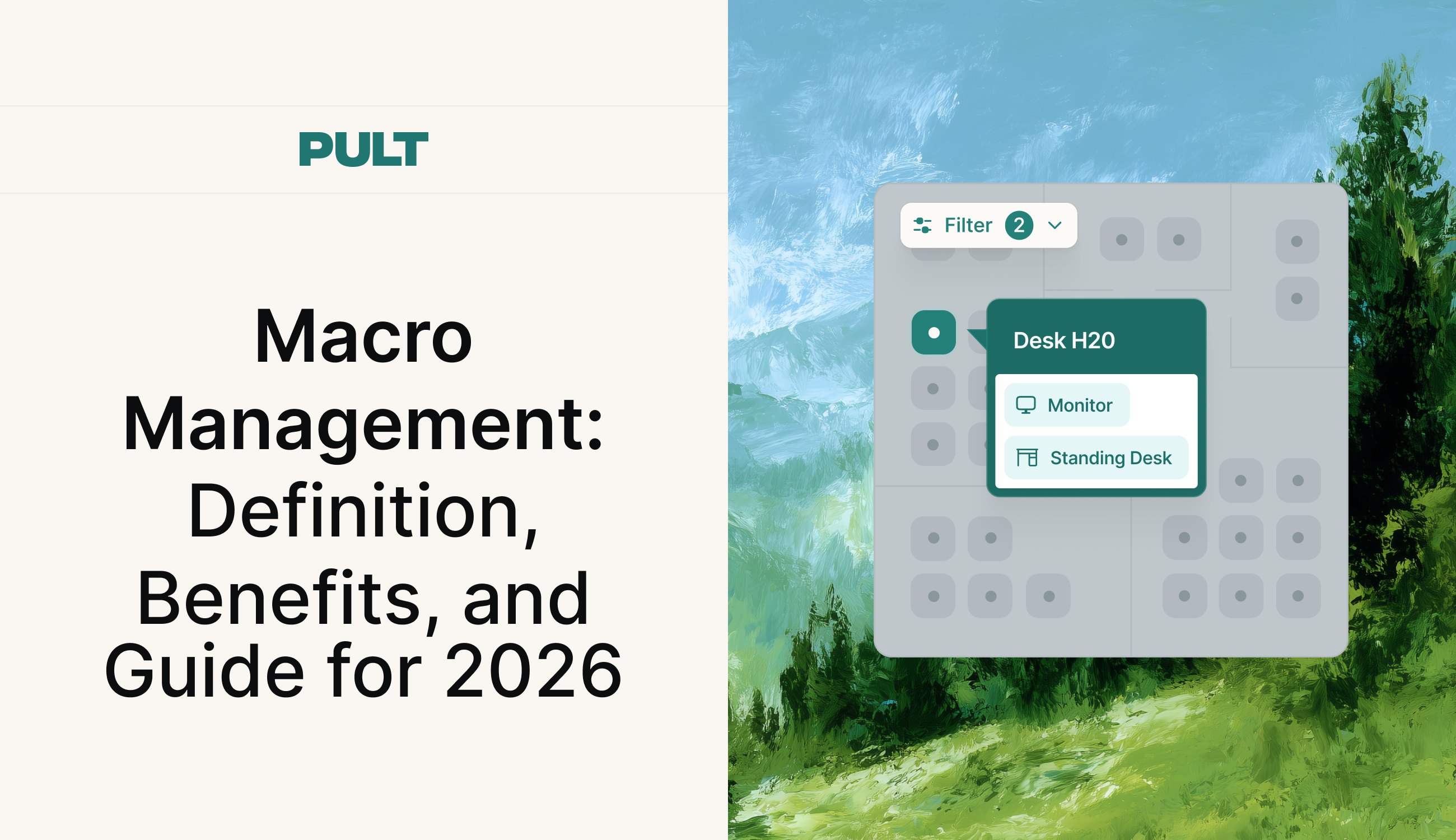
  • Equipment filter: Employees can specifically search for workplaces with height-adjustable desks (sit-stand desks), ergonomic chairs or special monitors.
  • Fixed assignments when needed: For employees with special medical or physical requirements, PULT enables permanent reservation of fixed workplaces as an exception to desk sharing.
  • Emergency Export: At the push of a button, administrators generate a list of all persons actually present. Thanks to WiFi detection (PULT Presence), "no-shows" or spontaneous visitors are also precisely recorded.
  • Capacity control: The software automatically prevents overcrowding of zones. This way, fire safety regulations and escape route capacities are technically accounted for.
  • AI Health & Safety Agent: Our AI agent helps convert occupational safety regulations into tasks and pre-fill compliance documents for audits with real presence data.
  • Noise and acoustic management: Through clear zoning into quiet and team zones as well as the bookability of phone booths, acoustic stress is reduced.
  • Psychological relief: The guarantee of a firmly reserved workplace eliminates the stress of morning searching and ensures a calm start to the workday.
Tip: Learn more about automatic presence detection via WiFi at PULT Presence.

{{onpage-cta}}

The top 6 tools for hybrid work

The frequent switch between home office and office days requires more coordination to distribute workspaces and rooms fairly. Tools designed for hybrid work help with this. These systems allow employees to book desks, rooms and parking spaces, show real time occupancy and comply with data protection requirements.

How do I choose the best tool for hybrid working?

Which features matter in a hybrid work tool depends on how your organisation works and which processes you want to support. The following criteria will help you choose the right tool and show when each aspect becomes especially important.

  • Booking of workstations, rooms and other spaces: useful when desks, meeting rooms, zones or parking spaces need to be reserved reliably.
  • Digital floor plans and visual overviews: helpful when employees need to find their way around the office and choose specific areas such as team zones, quiet zones or project spaces.
  • Automation, check in and no show handling: important when spaces are often booked but not actually used, because tools with check in can release unused bookings automatically.
  • Integrations with calendar and collaboration tools: valuable when your organisation already works with Microsoft 365, Outlook, Google Calendar, Microsoft Teams or Slack.
  • Visitor management: relevant when customers, job candidates or other guests visit regularly.
  • Parking and resource management: important when parking spaces, charging stations or special resources, for example equipment or specialist workstations, also need to be booked.
  • Analytics, utilisation reports and space planning: very important if you want to improve and develop your office space, because dashboards with utilisation rates, booking patterns and no show data reveal which areas are well used and which remain empty.
  • Data protection, hosting and compliance with European privacy laws: essential for organisations based in Europe or handling data from European users.
The following information on features, prices and services is based on publicly available sources from the providers (as of November 2025). It is intended for general guidance only. Providers may change their offerings at any time, and no guarantee can be given for completeness or accuracy.

This article includes a presentation of PULT as part of a market overview. It is based on careful research but is not an objective test report. It is an editorial comparison that contains partially promotional elements.

All mentioned brands are the property of their respective owners and are listed for comparison purposes only. PULT has no business relationship with the providers named

The best tools for hybrid work

#1 PULT

PULT is a tool for hybrid work and workplace management. It allows employees to book and organise workstations, meeting rooms and other resources and includes additional features for visitor management, office analytics and attendance and utilisation insights.

The software integrates with Microsoft Outlook, Microsoft 365, Google Calendar, Microsoft Teams and Slack. Rooms and workstations that were booked but not used are released automatically. PULT also provides analytics on actual usage and booking patterns, which makes it easier to plan rooms, zones and workstations.

  • Desk booking: booking desks through interactive floor plans with tags, equipment filters, QR check in and automatic Wi Fi based check in.
  • Room booking: booking meeting rooms with two way calendar synchronisation for Outlook and Google, resource management, invitations and optional catering.
  • Hybrid team planning: a clear overview of who is in the office, remote or unavailable, with options for favourites, recurring days, anonymous bookings and calendar matching.
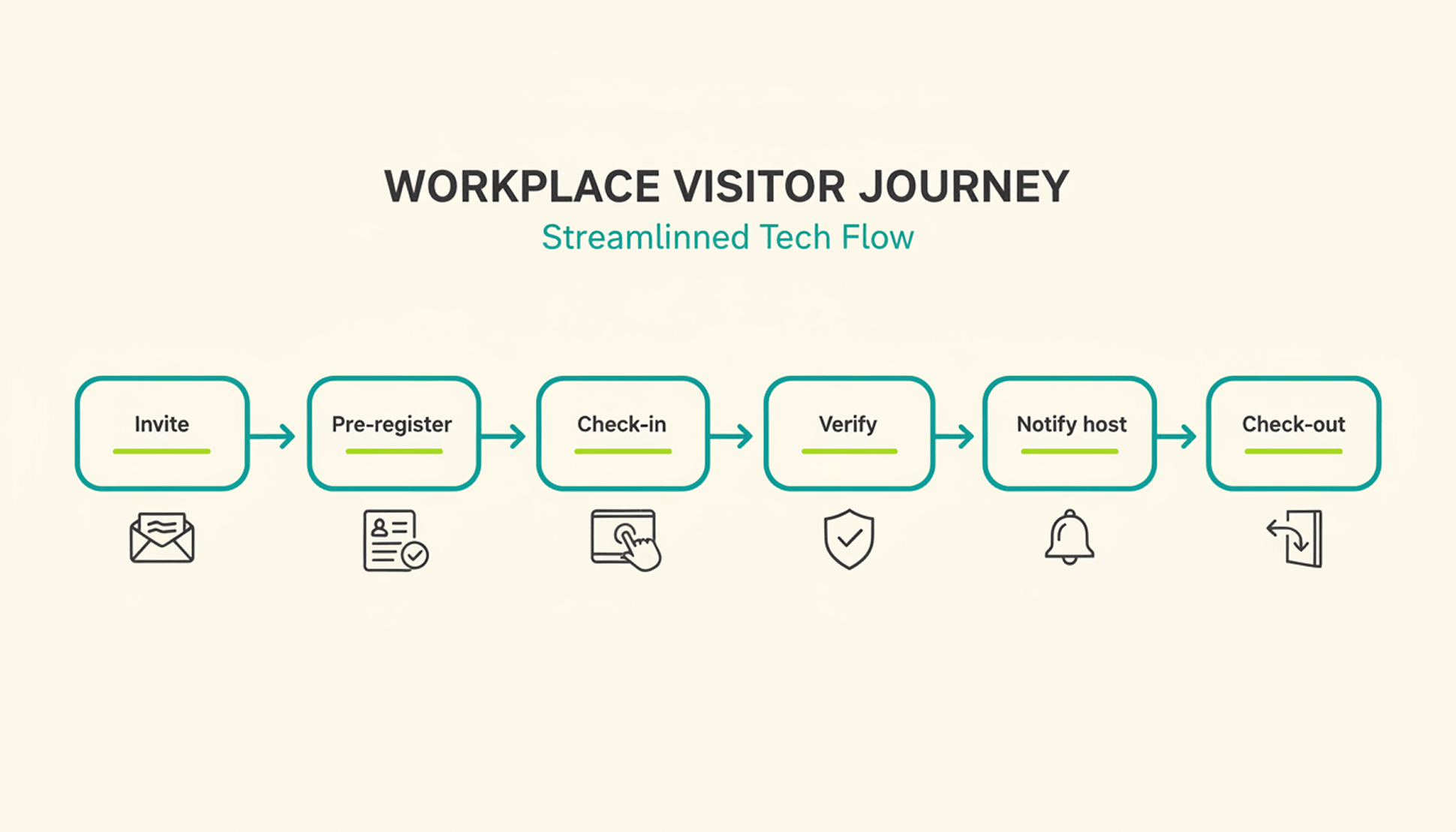
  • Visitor management: digital visitor registration, custom sign in flows, documents and NDAs, an iPad reception mode, host notifications and badge printing.
  • Office analytics: utilisation reports, occupancy statistics, heatmaps and export functions to analyse space usage.
  • PULT Presence: automatic attendance detection through Wi Fi, configurable rules, logs and reports for return to office and compliance requirements.
  • Parking and additional resources: management and booking of parking spaces and other office resources.
  • Integrations: connections to Microsoft 365, Google Workspace, Slack, Microsoft Teams, Okta, various HRIS systems and Wi Fi, network and MDM systems.
  • Security and hosting: developed and hosted in Germany with GDPR compliant data processing and an ISO 27001 certified infrastructure.

Prices for PULT:

Pricing for PULT starts at 1.90 euros per user per month. Higher tier plans include additional features such as API access, single sign on and white label options. A free demo and product walkthrough are available.

Workspace booking in PULT

#2 Seatti

Seatti is a hybrid work platform focused on desk and space booking. It integrates deeply with Microsoft Teams and Microsoft Entra ID and brings together the booking of workstations, meeting rooms and parking spaces, along with team planning features and analytics on office usage.

  • Desk booking: booking workstations through interactive floor plans with minute precise reservations, reuse of previous week’s bookings and booking suggestions inside Microsoft Teams.
  • Meeting room booking: conference and meeting rooms can be booked within the same interface.
  • Parking and resource booking: parking spaces and other resources can be booked in the same system, and the Teams app supports bookings for desks, rooms and parking spaces.
  • Team and location overview: a clear view of where colleagues are working, which locations are used and when shared office days make sense.
  • Data analytics and utilisation reports: insights into office and workstation usage supported by data analysis.
  • Microsoft 365 integration and Teams app: native integration with Microsoft Teams, installation through the Teams App Store, use of Microsoft single sign on and connection to Microsoft Entra ID.
  • Data protection, anonymisation and ISO certification: Seatti is certified under ISO 27001. Bookings can be made with names or anonymously. Usage reports are based on aggregated, anonymised data and, according to the provider, are not intended for employee monitoring.

Prices for Seatti:

Seatti offers three plans starting at 1.90 euros per user per month. Larger plans include additional features. All features are included in the Hybrid Enterprise plan, for which pricing is available on request. Booking conference rooms and ordering catering are paid add on modules.

#3 desk.ly

desk.ly is a workplace management platform designed for hybrid work. It allows organisations to manage workstations, rooms and parking spaces easily and offers additional features for analytics and administration.

  • Booking of individual workstations, meeting rooms and parking spaces: users reserve spaces and rooms through digital floor plans or calendar views. Reservations can be made in the browser or through the app.
  • Digital office floor plans: interactive maps show which spaces are available.
  • Calendar integration: synchronisation with Microsoft Outlook, Google Calendar and Microsoft Teams.
  • Team overview: a clear view of who is in the office on which day.
  • Kiosk and attendance mode: through a terminal, tablet, laptop or smartphone, employees can register their attendance or book an available space on the spot.
  • Parking management: booking and managing parking spaces and charging points.
  • Analytics and utilisation reporting: dashboards show how often workstations and rooms are booked. These insights help plan office space more efficiently and avoid bottlenecks.
  • Data protection and hosting: hosted exclusively in German data centres (AWS Frankfurt), ISO 27001 certified and fully GDPR compliant. A data processing agreement can be requested directly.

Prices for desk.ly:
The corporate plan starts at 1.65 euros per user per month, and the enterprise plan starts at 2.20 euros per user per month. A free version for small teams with up to fifteen users is also available.

#4 DEIN RAUM

DEIN RAUM is a cloud-based desk sharing and workspace booking platform from Germany. The tool lets companies reserve and manage desks, parking spaces and meeting rooms in one system and is designed for organisations working in hybrid models. Access is available via browser and mobile devices, with integrations for common office environments.

  • Desk booking with calendar view, favourites and equipment details, allowing employees to reserve desks flexibly and on specific days.
  • Parking space booking with visualised parking spots and indicators for EV charging stations.
  • Meeting room booking for reserving conference rooms in the same system used for desks and parking spaces.
  • Digital floor plans to display desks, parking spaces and rooms directly on the office layout.
  • Check-in functionality to confirm actual usage and automatically release unused bookings.
  • Occupancy analytics providing insights into the utilisation of desks, rooms and parking spaces.
  • Weekly rules and recurring bookings to support regular office days and repeating booking patterns.
  • Room display screens and meeting room add-ons to show availability and reservations directly at the room.
  • Equipment management and parking-space rental for booking additional items and managing rented parking spots.
  • Integrations such as single sign-on (SSO), Microsoft Teams integration and an Outlook add-in, with use across smartphone, laptop or tablet.
  • Data protection: According to the provider, the tool is fully GDPR compliant and hosted on servers in Germany.

Pricing for DEIN RAUM:

DEIN RAUM offers tiered plans with increasing functionality. The Basic plan is priced at €1.30 per user per month, while the Advanced plan costs €1.80 per user per month. All features are included in the Enterprise plan, with pricing available on request.

#5 Flexopus

Flexopus is a workplace management platform for hybrid teams. The software enables booking and managing desks, meeting rooms and parking spaces in one system and visualises office layouts through digital floor plans. The platform is developed and hosted in Germany and meets all relevant data protection and security requirements.

  • Desk and room booking: Reservation of desks, meeting rooms and zones via web or mobile app.
  • Digital floor plans: Interactive maps showing available and occupied spaces.
  • Check-in and check-out: Registration via QR code or workstation display, with automatic release if a booking is not used.
  • Room and desk displays: Flexopus provides its own hardware to show booking status and enable on-site check-ins.
  • Visitor management: Guests can be pre-registered and receive an email invitation with QR code for check-in at reception.
  • Analytics and reporting: Insights into workspace and room utilisation.
  • Integrations: Connections with Microsoft Teams, Outlook, Google Calendar and a REST API for custom integrations.
  • Data protection and hosting: Hosted on servers in Germany (Hetzner in Nuremberg/Falkenstein), ISO 27001 certified. Flexopus provides a data processing agreement and documentation on subprocessors.

Prices for Flexopus:
Flexopus uses a resource-based pricing model, meaning costs depend on the number of desks, rooms or other bookable resources. The software can be tested free of charge for 30 days. In the Starter plan, each resource starts at €1.59 per month, while the Business plan with additional features starts at €2.99 per resource per month.

#6 raum]für[raum

raum]für[raum is a software platform for booking and managing desks, rooms and additional resources. It supports desk sharing, meeting room booking, video conference planning and resource management, and can be integrated into existing IT environments. In addition to the cloud version, hosting in German data centres is available.

  • Desk booking and desk sharing: Booking for shared and assigned desks, including filters for equipment such as monitors or accessible workspaces, plus the option to book desks on behalf of colleagues.
  • Room booking: Booking for meeting rooms, training rooms and other spaces, with centralised management of all reservations.
  • Booking of additional resources: Booking for parking spaces, vehicles and extra services such as catering or technical equipment that can be added to a reservation.
  • Floor and building plans: Visual layouts of desks and rooms that can be configured via drag and drop.
  • Check-in functions and smart booking logic: Ensures that reserved spaces are actually used and reduces no-shows.
  • Video conferencing and Outlook integration: Enables meeting planning with room and equipment reservations directly from familiar tools.
  • Visitor and resource management: Management of visitor bookings and integration with related systems such as digital signage.
  • Mobile app: Booking desks, meeting rooms and parking spaces via smartphone.
  • Integrations: Outlook, video conferencing systems and digital signage solutions; available as a web app, desktop app and mobile app.
  • Data protection and hosting: According to the provider, raum]für[raum is GDPR-compliant and hosted in Germany.

Prices for raum]für[raum:

The offering is modular, allowing features to be combined as needed. Pricing is available on request.

What makes PULT a popular tool for hybrid work?

With PULT Presence, employee attendance is automatically detected the moment their laptop or phone connects to the company WiFi. No check in action or additional hardware is required because the WiFi connection alone is enough.

Inside PULT, you can see both the booking data and the actual usage of desks, rooms, zones and parking spaces.

{{logos}}
{{onpage-cta}}

The 6 best desk booking systems

Desk booking systems usually combine the reservation of desks, meeting rooms, office zones and other workplace resources in a single platform. Many providers also offer integrations with calendar and chat tools.

How do I choose the best desk booking system?

The best system for your team depends on how you work and what processes you want to support. The criteria below help you evaluate the options and show when each point matters most.

  • Booking of desks and rooms: relevant when desks, meeting rooms and office zones need to be used flexibly and you require binding reservations.
  • Floor plans and visual office overview: important when employees want to choose specific seats or when you operate across multiple floors or locations.
  • Automation and check in (no show handling): relevant when booked but unused spaces are a recurring problem. Automatic release after a set time ensures that resources are not blocked.
  • Calendar synchronisation (Outlook / Google Calendar): important when meetings and office attendance should be managed in the same calendar. A two way sync ensures that bookings match in both the booking system and the calendar.
  • Integrations with Microsoft 365, MS Teams, Slack and similar tools: especially relevant when your daily collaboration already takes place in Teams, Outlook, Slack or Google Workspace.
  • Team and attendance overview (hybrid planner): useful for hybrid teams that coordinate in office days. Seeing who will be in the office on which day makes planning much easier.
  • Parking and resource booking: relevant when you also need to book parking spaces, visitor spots or additional equipment such as monitors or technical devices.
  • Visitor management: important if you regularly host guests, candidates or service providers. Digital pre registration, check in, host notifications and visitor logs streamline the reception process.
  • Analytics and occupancy reports: especially relevant when you want to optimise office space. Dashboards showing occupancy levels, booking frequency, peak times and no shows reveal which spaces are truly used.
  • Data protection, hosting and compliance with GDPR and local privacy regulations: essential for companies in Germany, Austria and Switzerland.
The information on features, pricing and services is based on publicly available sources from the providers (as of November 2025). It is intended for general orientation only. Providers may change their offerings at any time, and no guarantee can be given for completeness or accuracy.

This article includes a presentation of PULT as part of a broader market overview. It is based on careful research, but it is not an objective test report. It is an editorial comparison that includes some promotional elements.

All mentioned brands are the property of their respective owners and are listed for comparison purposes only. PULT has no business relationship with the providers referenced here.

The 6 best desk booking systems

#1 PULT

PULT is a cloud based desk booking system developed in Germany. It combines all major features needed to organise modern office spaces. The platform supports the booking of desks and meeting rooms and also includes visitor management, attendance overviews, parking, hybrid team planning and detailed analytics on office utilisation.

The software integrates with Microsoft Outlook, Microsoft 365, Google Calendar, MS Teams and Slack. Booked but unused rooms and desks are automatically released again. In addition, PULT provides insights into actual usage and booking behaviour, making it easier to plan and optimise rooms, spaces and workstations.

  • Desk booking (Desk Booking): Booking desks through interactive floor plans with tags, equipment filters, QR check in and automatic check in via WiFi.
  • Room booking (Room Booking): Booking meeting rooms with two way calendar sync for Outlook and Google, resource management, invitation options and optional catering.
  • Hybrid team planning: Clear overview of who is in the office, remote or unavailable on each day. Options include favourites, recurring days, anonymous bookings and calendar synchronisation.
  • Visitor management: Digital visitor registration, custom sign in flows, documents and NDAs, iPad reception mode, host notifications and badge printing.
  • Office analytics: Utilisation reports, occupancy statistics, heatmaps and export functions to analyse how space is used.
  • PULT Presence: Automatic attendance detection through company WiFi, with configurable rules, logs and reports for RTO and compliance.
  • Parking and additional resources: Booking and administration of parking spaces and other office resources.
  • Integrations: Connections with Microsoft 365, Google Workspace, Slack, MS Teams, Okta, HRIS systems and WiFi or network based systems.
  • Security and hosting: Developed and hosted in Germany with GDPR compliant data processing and ISO 27001 certified infrastructure.

Pricing for PULT:

Pricing for PULT starts at 1.90 euros per user per month. Higher tier plans include additional features such as API access, single sign on and white label options. A free demo and product walkthrough are available.

Zur Arbeitsplatzbuchung in PULT

#2 Flexopus

Flexopus is a booking system for desks and meeting rooms that brings the core functions of desk booking together in one platform. The software is developed and hosted in Germany and meets strict requirements for data protection and security.

  • Desk and room booking: Reserve desks, rooms and zones through the web or the mobile app.
  • Digital floor plans: Interactive office maps that show available and occupied spaces.
  • Check in and check out: Arrival and departure via QR code or the desk display, with automatic release if a booking is not used.
  • Room and desk displays: Flexopus offers its own hardware to show booking status and support check ins directly on site.
  • Visitor management: Guests can be registered in advance with invitation emails and QR code check in at reception.
  • Analytics and reporting: Insights into how desks and rooms are used across the office.
  • Integrations: Works with Microsoft Teams, Outlook, Google Calendar and provides a REST API for custom integrations.
  • Data protection and hosting: Hosted on German servers (Hetzner in Nürnberg and Falkenstein), ISO 27001 certified. Flexopus also provides a data processing agreement and details on its subprocessors.

Pricing for Flexopus
Flexopus uses a resource-based pricing model, meaning the cost depends on the number of desks, rooms or other items you want to manage. You can try the software free for 30 days.

In the Starter plan, each resource begins at 1.59 € per month.

In the Business plan, which includes additional features, each resource begins at 2.99 € per month.

#3 desk.ly

desk.ly ist ein deutsches Arbeitsplatz-Buchungssystem. Die Plattform ermöglicht eine einfache Organisation von Arbeitsplätzen, Räumen und Parkplätzen und bietet darüber hinaus Funktionen für Auswertung und Administration.

  • Booking of individual workstations, meeting rooms and parking spaces: Users reserve desks and rooms through digital floor plans or calendar views. Bookings can be made in the browser or via the app.
  • Digital office floor plans: Interactive maps show all available spaces.
  • Calendar integration: Synchronisation with Outlook, Google Calendar and MS Teams.
  • Team overview: Shows who will be in the office on which day.
  • Kiosk and attendance mode: Employees can record their attendance in the office or book available spaces spontaneously using a terminal, tablet, laptop or smartphone.
  • Parking management: Booking and administration of parking spaces and charging points.
  • Analytics and utilisation: Dashboards show how often desks and rooms are booked and help optimise the use of office space.
  • Data protection and hosting: Operated in German data centres (AWS Frankfurt), ISO 27001 certified and fully GDPR compliant. A data processing agreement can be requested.

Pricing for desk.ly:
The Corporate plan starts at €1.65 per user per month, and the Enterprise plan starts at €2.20 per user per month. A free version is available for small teams with up to 15 users.

#4 Seatti

Seatti is a cloud based desk booking system designed for companies with hybrid work models, especially those working heavily with Microsoft 365. The software is tightly integrated with Microsoft Teams and Microsoft Entra ID and brings together desk booking, room booking and parking reservations, along with team planning and analytics on office usage.

  • Desk booking: Booking desks through interactive floor plans with minute level reservation, reuse of last week’s bookings and booking suggestions directly inside Microsoft Teams.
  • Room booking: Conference and meeting rooms can be booked in the same interface.
  • Parking and resource booking: Option to book parking spaces and other resources in the same system, with the Teams app supporting bookings for desks, rooms and parking.
  • Team and location overview: Overview of where colleagues are working, which locations are being used and when shared office days make sense.
  • Analytics and occupancy reports: Insights into space usage and workplace occupancy with data analytics.
  • Microsoft 365 integration and Teams app: Native integration in Microsoft Teams, installation through the Teams App Store, Microsoft SSO support and connection to Microsoft Entra ID.
  • Data protection, anonymisation and ISO certification: Seatti is ISO 27001 certified. Bookings can be named or anonymous. Usage reports are based on anonymised, aggregated data and are not intended for employee monitoring according to the provider.

Pricing for Seatti:

Seatti offers three plans starting at 1.90 € per user per month. Higher tier plans include additional features. All features are included in the Hybrid Enterprise plan, with pricing available on request. Booking conference rooms and catering is offered as an add on module with an additional fee.

#5 anny

anny is a cloud based desk booking system from Germany that brings together the management of workspaces, meeting rooms, parking spaces and other office resources in one platform. The software is used for workspace management in hybrid offices, room bookings, visitor management and event or resource calendars.

  • Workspace and desk booking: Booking workspaces through a single interface. Workspaces can be managed as individual child resources and can be controlled with rules, quotas and access permissions.
  • Meeting room and space booking: Booking meeting rooms and other spaces with a calendar view, calendar synchronisation with Outlook and Google Calendar, plus optional add ons such as catering or equipment.
  • Parking and resource management: Management and reservation of parking spaces, equipment and other resources in the same system used for desks and rooms, including detailed booking rules.
  • 3D maps: Visualisation of locations, floors, rooms and workspaces on an interactive three dimensional map that allows direct booking.
  • Communities, permissions and booking rules: Control over which users can book which resources through communities (groups), roles and permission systems, booking quotas and extended booking rules.
  • Planner and calendar features: Planning office attendance and bookings with calendar, planner and map views, including two way synchronisation with Microsoft 365 and Google Workspace.
  • Visitor management: Digital visitor registration with check in, collection of contact details, digital signatures and optional badge printing.
  • Analytics and occupancy reports: Insights and heatmaps showing the utilisation of rooms and workspaces, helping to assess and optimise space usage.
  • Integrations (Microsoft 365, Google Workspace, smart locks, HR): Connections to Microsoft 365, Google Workspace, Microsoft Teams, smart lock systems and third party tools such as Personio, plus API and webhook access in higher tier plans.
  • Data protection and hosting: According to the provider, anny is fully GDPR compliant, developed in Germany and hosted on servers located in Germany.

Pricing for anny

Pricing is based on the number of managed resources and the chosen plan. In the Essential plan, one resource costs 5 dollars per month. In the Professional and Business plans, the price per resource increases to 10 and 15 dollars per month, and each plan includes a broader set of features.

#6 deskbird

Desk and room booking: Booking desks, meeting rooms and parking spaces via web, app or Microsoft Teams.

  • Weekly planning: Teams plan their office days together, see who will be onsite on which days and coordinate shared office time.
  • Automatic release for no shows: Unused bookings are cancelled after a set period, making desks available again.
  • Visitor management: Guests can be registered in advance and checked in digitally when they arrive.
  • Analytics and reporting: Insights into occupancy rates, usage frequency and desk availability.
  • Integrations: Connections to Microsoft Teams, Outlook, Slack and Google Calendar. The platform also provides API, SCIM and SAML interfaces for larger organisations.
  • Data protection and hosting: GDPR compliant. Data is processed in the Google Cloud region in Frankfurt, Germany. ISO 27001 certified. Personal booking data can be anonymised automatically, by default after six months.

Pricing for deskbird

Licensing is based on the number of users. The Starter plan begins at €2.80 per user per month, and the Business plan starts at €3.80 per user per month, with reduced pricing available for larger user numbers. Enterprise plans are available for larger organisations.

What makes PULT a popular desk booking system?

In PULT you see both booking data and the real occupancy of desks, rooms, zones and parking spaces.

With PULT Presence the actual presence of your employees is recorded as soon as their laptop or smartphone connects to the company WiFi. Check in happens automatically and does not depend on any sensors. Your WiFi is all that is required.

{{logos}}

{{onpage-cta}}

Hybrid Work

How companies can make their workplace more sustainable

Germany has already reduced its greenhouse gas emissions by around forty eight percent compared to 1990 and aims to reach climate neutrality by 2045. Yet sectors such as buildings, transportation, and parts of the wider economy still offer significant untapped potential, including how workplaces themselves can be made more sustainable.

Sustainability in the Workplace: key takeaways

  • Sustainability in the office comes from using energy and materials responsibly, creating healthy working conditions, and designing spaces that match what employees actually need.
  • Simple actions you can implement immediately such as switching off devices, printing on both sides, or choosing video calls instead of short trips reduce consumption right away.
  • Buildings account for the largest share of energy use. Every hour without heating, cooling, or lighting lowers resource demand.
  • Ergonomic workstations, good air quality, and zones designed according to real needs reduce strain on employees and improve their ability to work.
  • Desk sharing reduces resource use because it prevents unused space from being maintained and frees up areas that can be turned into functional work zones.
  • Sustainable space planning relies on accurate usage data so that the number and types of workspaces fit actual demand.

What makes a workplace sustainable?

A sustainable workplace is built on three pillars: using resources responsibly, creating healthy working conditions, and ensuring processes that make economic sense.

In practice, this means using energy and materials carefully, shaping everyday work in a way that supports employee health, and establishing structures in the company that help people work effectively.

Ecological Dimension

The ecological dimension of workplace sustainability includes everything that influences resource consumption in the office:

  • electricity for lighting and IT
  • heating and cooling
  • paper use
  • waste
  • commuting and mobility

Buildings in Germany are among the largest energy users and account for roughly 35% to 40% of final energy consumption. Every improvement, whether more efficient lighting, reduced paper use, or better mobility planning, has a direct impact.

Social Dimension

The focus here is on how the workplace and its surrounding environment affect employee health. A large share of absences is caused by musculoskeletal issues and mental stress.

Ergonomic furniture, enough movement throughout the day, good air quality, and a calm working environment help maintain and improve performance. Sustainability also means creating a workplace that supports employees in a lasting and meaningful way.

Economic Dimension

This dimension relates to the economic efficiency of daily work. Electricity costs, material consumption, device lifespan, and the use of office space all have a direct impact on the budget.

At the same time, new EU requirements such as the CSRD (Corporate sustainability reporting)  demand more comprehensive sustainability reporting. Measures that save resources and establish clear processes support companies on both the operational and regulatory level.

How can energy and resource use in the office be reduced?

Most energy and resource consumption in the office comes from heating, cooling, lighting, IT equipment, and material use. With a few technical adjustments and clear behavioural guidelines, these levels can be reduced significantly.

Adjust building technology

  • Adjust heating and cooling temperatures: Lowering the room temperature by one degree in winter reduces heating demand by about six percent. Raising the cooling temperature by one degree in summer leads to similar savings.
  •  Ventilate rooms properly: Short, complete air exchanges lower carbon dioxide levels and prevent unnecessary heat or cold loss. Tilted windows keep rooms open for long periods and significantly increase energy use.
  • Improve lighting: Replacing older bulbs with LEDs noticeably reduces electricity consumption. Motion sensors prevent lights from staying on in unused rooms, and zone based lighting prevents entire floors from being lit when only a few areas are used.

Set clear operating guidelines:

  •  Energy settings for workstations: Terminals, laptops and monitors should switch to energy saving mode after defined periods and power down at the end of the working day.
  •  Reduce the number of devices: One large multifunction printer uses less energy than several small machines spread across different offices.
  •  Check additional devices: Portable heaters, personal fridges or desk fans increase consumption disproportionately. Companies should define which extra devices are allowed and which are not.

Adjust behaviour in the office:

  • Switch devices off completely: Computers, monitors and peripherals should be turned off at the end of the working day. High standby consumption mainly comes from devices running overnight or through the weekend.
  • Keep doors closed: When heating or cooling is in use, energy demand rises sharply if warm or cold air escapes. Closed doors reduce this loss.
  • Use office materials carefully: Supplies should only be taken when needed. A shared supply station prevents stockpiling in different rooms and reduces waste.

Reduce resource consumption:

  • Lower paper usage: Digital workflows replace printed documents. When printing is necessary, double sided and black and white settings should be the default.
  • Use recycled paper: Recycled paper with environmental certification saves up to seventy eight percent water and about sixty eight percent energy compared to fresh fibre paper.
  • Centralise consumables: Storing supplies in one place prevents duplicate orders and gives a clear picture of actual usage.

How do I set up my office in a sustainable way?

A sustainable office setup follows three core principles: materials that require few resources and do not pollute indoor air, furniture that can be used and repaired for many years, and workstations that minimise physical strain. In addition, spaces should be arranged and used in a way that reflects what employees actually need.

Choose materials that are gentle on the environment and indoor air:

When it comes to furniture and equipment, the choice of materials affects both the environmental footprint of production and the air quality in the workspace.

  • Wood with FSC or PEFC certification: This confirms that the wood comes from responsibly managed forests.
  • Furniture with tested emissions: Products carrying environmental labels such as the Blue Angel release fewer volatile substances into the air.
  • Modular furniture: Individual parts such as tabletops, wheels or fittings can be replaced without having to dispose of the entire piece

Choose furniture that will last:

Durable furniture reduces resource use because replacements are needed less often.

  • Solid construction: Sturdy table frames, hard wearing surfaces and reliable mechanisms mean fewer repairs.
  • Available spare parts: Items such as gas lifts, armrests or caster wheels should be easy to order separately.
  • Refurbished furniture: Restored pieces can offer the same functionality while using far fewer materials.

Set up workstations ergonomically:

An ergonomic layout reduces back, neck and shoulder strain and therefore helps prevent common causes of absences.

  • Height adjustable desks: Switching between sitting and standing eases the load on the spine.
  • Adjustable chairs: Seat height, seat depth, backrest and armrests should all be adjustable.
  • Position screens correctly: The top edge of the monitor should be roughly at eye level and glare from windows or lamps should be avoided.

Set up spaces according to actual needs:

In many companies, the increase in home office days means that parts of the office remain empty at times and overall occupancy drops. Instead of maintaining permanently assigned desks, this creates an opportunity to rethink how the entire space is used.

  • Share workstations: When employees are not on site every day, fewer individual desks are needed.
  • Define zones: Quiet areas for focused work, areas for collaboration and calls, break areas and additional zones for movement and balance.
  • Use booking software: This makes it clear when specific office resources are in use. Heating, cooling, ventilation, cleaning and maintenance can be managed more efficiently.
Tip: With a booking tool, your employees can reserve a desk, a meeting room or a specific zone for their team day. This gives everyone fair access to all shared resources.

Improve indoor climate and lighting:

  • Add plants: They reduce noise and improve the perceived air quality.
  • Monitor carbon dioxide levels: A simple measuring device shows when it is time to ventilate.
  • Create even lighting: Glare free, daylight like lighting reduces eye strain and fatigue.

How can employees make their commute and business trips more sustainable?

Sustainable mobility at work means avoiding unnecessary journeys and choosing transport options that cause fewer emissions per kilometre when travel is required. The biggest impact comes from the choice of transport and the decision whether a meeting truly requires travel in the first place.

Plan commutes in a smarter way:

The daily commute is the biggest source of mobility related emissions in many organisations. The difference between transport options is significant.

  • Use a bike for short distances: For short routes in urban areas, a bike is often the fastest option. It produces no direct emissions and helps ease traffic.
  • Take public transport when possible: Buses and trains cause far fewer emissions per kilometre than a car. Many employees benefit from a subsidy for the Deutschlandticket because it makes switching to public transport easier.
  • Share rides: When several colleagues live in the same area, sharing one car reduces the number of daily trips.

Review business trips and appointments:

  • Use digital meetings: If a meeting does not require direct personal interaction, a video call is sufficient.
  • Combine several appointments: For on site visits, check whether additional client meetings or supplier visits can be arranged on the same day.
  • Assess distances carefully: Short business trips can often be done on foot or by bike as long as no materials need to be transported.

Align company offerings:

Some of the mobility measures mentioned only work when the company provides the right conditions.

  • Bike parking facilities: Covered parking and charging options for e bikes make switching to a bike much easier.
  • Changing rooms and storage: Space for helmets, wet clothing, backpacks, shoes and a change of clothes supports employees who cycle or walk.
  • Company bikes and JobRad style models: A good option for employees who do not want to use their own bike or who travel longer distances.

How can office nutrition be made more environmentally friendly?

Sustainable eating in the workplace depends on the choice of food, the handling of packaging and the way communal catering is organised. The biggest impact comes from deciding which meals are offered or brought to the office.

Benefits of communal catering:

A shared catering service through a canteen makes affordable meals possible in a way that individuals could not achieve on their own.

Lower food waste:

  • Caterers and canteens can plan portion sizes because they know guest numbers and eating habits.
  • Overproduction can be reduced and leftovers can be redistributed.
  • Waste does not accumulate at many individual desks but in one place where it can be monitored and reduced.

More control over meal composition:

  • Companies can increase the share of plant based dishes or make vegetarian options the standard.
  • Suppliers can be chosen deliberately with criteria such as regional, seasonal or certified sourcing.
  • The quality of ingredients can be defined consistently.

Fewer packaging materials:

  • Communal catering avoids the many single use packages that typically come with individual take away meals.
  • Large containers and reusable boxes replace disposable items.
  • Drinks can be provided through water dispensers or carafes.

Lower cost per portion:

  • Bulk quantities are cheaper than many single portions.
  • Plant based dishes are generally less expensive than meat based meals.
  • Lower waste volumes reduce disposal costs.

Better everyday nutrition:

  • Well planned menus support a more balanced diet.
  • Set meal times and a shared place to eat strengthen a sense of community and make breaks more restorative.
  • Employees need to shop less spontaneously, which usually leads to more sustainable choices.

What does sustainable use of office space look like?

A key part of sustainability comes from understanding how much office space is actually needed. Every square metre has to be heated, cooled, lit and cleaned, whether it is in use or standing empty.

In many companies, hybrid work means that a large share of desks remain unused on several days of the week. This creates vacant space that leads directly to unnecessary resource consumption.

Desk sharing reduces unused space:

When employees are not in the office every day, fewer permanent individual desks are needed. With desk sharing, the number of workstations is aligned with actual attendance. This lowers the amount of space that is maintained but not used.

The benefit is lower consumption per square metre:

  • less demand for heating and cooling
  • lower electricity use for lighting
  • reduced cleaning effort
  • fewer pieces of furniture and equipment that need to be provided

The space that becomes available when unused workstations are removed can be put to new use. You can turn it into rooms and zones that genuinely support the way your employees work.

  • Zones for focused work with acoustic shielding
  • Areas for collaboration and teamwork that can be adjusted freely
  • Phone booths and quiet rooms that are often missing in open offices
  • Social and break areas that improve the overall office experience
  • Spaces for exercise and options that support mental balance and play

These rooms and zones can be created and booked in the PULT booking software. Your employees can choose the place, room or zone that fits their task on any given day.

{{onpage-cta}}

The best workplace management software for your company

Workplace management software combines booking, planning, and analysis in one platform. In addition to reserving individual workstations and meeting rooms, it also analyzes the utilization of existing office resources. Many providers also offer integration with calendar and chat software.

What is the best workplace management software?

The best workforce management software covers a wide range of requirements. Which features are important to you depends on your specific project. The following criteria can help you make your selection:

  • Booking workstations and rooms: If desks, meeting rooms, or zones are to be used as needed.
  • Floor plans and overview: When digital maps or calendar views make it easier to keep track of available space.
  • Automation and check-in: To automatically release booked but unused spaces and reliably record attendance.
  • Analytics and utilization: To measure the actual use of workspaces, identify heavily and rarely used resources, and further develop space planning accordingly.
  • Integrations: When Microsoft 365, Outlook, Google Calendar, Slack, or MS Teams need to be integrated into existing workflows.
  • Data protection and hosting: When data processing must comply with GDPR.
  • Identity and access systems: Recommended when SSO, SCIM, or API connections are needed to enable secure and uniform user management.
The following information on features, prices, and services is based on publicly available sources from the providers (as of October 2025). It is for guidance only. Providers may make changes at any time; no guarantee can be given for the accuracy or completeness of this information. 

This article contains a presentation of PULT as part of a market overview. It is based on careful research, but is not an objective test report, rather an editorially prepared comparison with some promotional elements.

All brands mentioned are the property of their respective rights holders and are listed for comparison purposes only. PULT has no business relationship with the providers mentioned.

The 5 best workspace management softwares 2026

#1 PULT

PULT is a platform from Germany that manages meeting rooms, workspaces, zones, and parking spaces in a single workplace management software. It also includes visitor management, office evaluation with statistics, and special features such as automatic check-in via Wi-Fi connection in PULT Presence.

The software can be integrated into Microsoft Outlook, Microsoft 365, Google Calendar, MS Teams, and Slack. Booked but unused rooms and spaces are automatically released again. In addition, PULT provides evaluations of actual usage and booking behavior, allowing for better planning of rooms, spaces, and workstations.

  • Workstation and room booking: Digital booking of desks, meeting rooms, and zones with calendar or floor plan view.
  • Hybrid Planner: Clear weekly planning in which teams can coordinate attendance and jointly determine office days.
  • Visitor management: Management of guests and external appointments, including digital check-in and automatic notification of the host.
  • PULT Presence: Automatic check-in via Wi-Fi to record actual presence in the office.
  • Office Insights: Evaluations of space utilization, capacity utilization, and booking frequency as a basis for further office planning.
  • Integrations: Connection with Microsoft Teams, Outlook, Google Workspace, Slack, Personio, and common SSO systems (Microsoft, Google, Okta).
  • Security & Hosting: Development and hosting in Germany, GDPR-compliant data processing, and ISO 27001-certified infrastructure.

PULT pricing:

PULT pricing starts at €1.90 per user per month. Additional plans offer advanced features such as API access, single sign-on, and white label options. A free demo and product demonstration are available.

To the PULT workplace management software

#2 Flexopus

Flexopus is a workplace and room booking software that combines all core workplace management functions in one platform. The system is developed and hosted in Germany and therefore meets data protection and security requirements.

  • Booking workstations, rooms, and parking spaces: Employees reserve available spaces, meeting rooms, or parking spaces using digital floor plans. Bookings are made via web app, MS Teams, or app.
  • Visitor management: Guests can be registered in advance, including email invitations and QR code check-in at reception.
  • Catering and resource planning: Rooms can be linked to additional services such as catering or equipment (e.g., projectors, technology).
  • Room and workspace displays: Flexopus offers its own hardware solutions for displaying booking status and check-ins directly on site.
  • Analytics & utilization: Dashboards show utilization, booking frequency, and no-shows. Companies can see which areas are actually being used and where there is potential for optimization.
  • Integrations: Connection to Microsoft Teams, Outlook, Google Calendar, and a REST API for individual connections.

Flexopus pricing:
Flexopus calculates prices based on resources, i.e., the number of workstations, rooms, etc. The software can be tested free of charge for 30 days. In the Starter plan, each resource costs from €1.59 per month, and in the Business plan with more features, from €2.99 per month.

#3 deskbird

deskbird is a Swiss provider specializing in booking software for hybrid workplaces. In addition to room booking, the platform also includes parking space reservations and team planning.

  • Booking workspaces and rooms: Desks, zones, and meeting rooms can be reserved directly via a calendar or floor plan view. Bookings can be viewed and adjusted in real time.
  • Hybrid weekly planning: Teams plan office attendance together, see who is on site on which days, and coordinate office days efficiently.
  • Automatic release for no-shows: Unused bookings are automatically canceled after a defined period of time to make workspaces available again.
  • Visitor management: Guests can be registered in advance and managed via digital check-ins upon arrival.
  • Analytics and utilization: Dashboards show occupancy rates, utilization trends, and booking behavior. The data helps optimize space utilization and plan office requirements.
  • Integrations: Link to Microsoft Teams, Outlook, Slack, and Google Calendar. The platform also offers API, SCIM, and SAML interfaces for larger organizations.

Prices from deskbird:

deskbird offers per-user licensing. Prices start at $2.80 per user per month for the Starter package and $3.80 per user per month for the Business package, with prices decreasing as the number of users increases. Individual enterprise plans are available for larger companies.

#4 desk.ly

desk.ly is German workplace management software that helps companies organize their office space. The application is designed for ease of use, clarity, and secure data processing.

  • Booking workstations, meeting rooms, and parking spaces: Users reserve spaces and rooms via digital floor plans or calendar views. Bookings can be made directly in the browser or via the app.
  • Kiosk and attendance mode: Employees can use a terminal or tablets, laptops, and smartphones to record their attendance at the office or book spontaneously available spaces.
  • Team overviews: Colleagues can see who is working in the office on which days and can schedule themselves to work next to each other.
  • Analytics and utilization: Dashboards show how often workspaces and rooms are booked. The evaluations help to plan office space more efficiently and avoid bottlenecks.
  • Integrations: Connection to Microsoft Teams, Outlook, and Google Workspace. Support for single sign-on (SSO) and SCIM in higher license levels.

Prices for desk.ly:

Corporate plan starting at $1.65 per user per month, Enterprise plan starting at $2.20 per user per month. A free version for small teams of up to 15 users is also available.

#5 Yoffix

Yoffix is workplace management software designed for companies that use Microsoft 365 or Outlook as their working environment. The software supports resource booking and the management of hybrid working models.

  • Booking workstations, rooms, and parking spaces: Employees reserve desks, meeting rooms, or parking spaces directly via digital floor plans or calendar views.
  • Resource and visitor management: Manage shared office resources such as monitors, technology, or parking spaces. Visitors can be registered and checked in via QR codes.
  • Hybrid planning: Weekly and team overviews show who is working in the office. This allows you to coordinate attendance and plan office occupancy.
  • Analytics and utilization: Dashboards provide key figures on booking frequency, occupancy, and room usage. Companies can use this information to optimize their space planning.
  • Integrations: Deep integration with Microsoft Teams and Outlook, plus connection to Slack and HR systems such as Personio or SAP SuccessFactors.

Yoffix prices:

From €1.50 per user per month for workplace booking, €10 per room per month for room management, €80 per month for visitor management. Additional features available at an extra cost per month and/or resource.

What makes PULT a popular workplace management software?

PULT provides you with booking data and values for the actual occupancy of workstations, rooms, zones, and parking spaces.

PULT Presence records the actual presence of your employees as soon as their laptop or smartphone connects to the company Wi-Fi. Check-in is automatic and completely independent of sensors. All you need is your Wi-Fi.

{{logos}}

{{onpage-cta}}