10 tips for reducing costs in your company

The most effective savings for companies come from uncovering costs that no longer bring any benefits.

Get your expenses and contracts under control immediately

Stop unnecessary renewals:

  • Identify all contracts and subscriptions with automatic renewal.
  • Check cancellation periods and set reminders for 30/60/90 days before expiration.
  • Cancel unused or redundant services immediately.

Tighten approvals for expenses:

  • Introduce an additional approval for purchases above a defined amount (e.g., $500 or $1,000).
  • Temporarily put a stop to new software, consulting services, or agency contracts until the need has been clearly established.

Quickly improve cash flow

  • Identify the largest outstanding invoices and set up reminder and clarification processes.
  • Define clear payment terms for new customers.
  • Identify excess inventory and slow-moving items and review sales or return options..

Reduce cloud costs

  • Reduce oversized subscriptions based on actual CPU, memory, and network usage.
  • Automatically shut down development and test environments outside of working hours.
  • Use reservations or savings plans when workloads are stable.
  • Set tags for cost centers, projects, and teams.
  • Set up dashboards that show costs per service, team, or product.
  • Implement a monthly cloud review with savings targets.

Reduce space and office costs

Office and space costs are among the largest fixed cost blocks for many companies. Due to hybrid working models, i.e., switching between the office and working from home, many workplaces are permanently underutilized.

1. Record actual land use

  • Evaluate bookings, but above all, genuine access data/Wi-Fi logins to determine truly reliable usage rates. The easiest way to do this is with PULT Presence, as your employees do not need to take any action.
  • Check utilization by day, team, and area to identify peak and off-peak times.
  • Document occupancy over several weeks to rule out seasonal effects.

2. Optimize use of office space

  • Based on usage data, you can determine how many individual workstations you actually need to provide, always in conjunction with the desk sharing quota.
  • By combining the now reduced number of individual workstations, you can already save on cleaning, heating/cooling, and ventilation costs. 
  • Tip: Using the room booking feature in PULT, you can see exactly when meeting rooms are needed and therefore need to be operated. This also saves on ancillary costs.
  • Thanks to the reliable data, you can now make better use of these office spaces, which makes them cheaper per employee.
  • Check whether areas or floors can be reduced or closed in the medium term. If rental agreements allow this, offer permanently unused space for temporary or subletting.
  • Tip: This allows you to offer parts of your office space for external use, for example as a co-working space. This generates additional income.

Reduce energy costs

Energy costs are a significant cost factor. Due to rising grid fees, CO₂ pricing, and the requirements of the Energy Efficiency Act (EnEfG).

Reduce energy consumption

  • If possible, put devices on standby or switch them off completely.
  • Activate night and weekend shutdowns for lighting, ventilation, and IT peripherals.
  • Check heating curves and room temperatures and adjust them to actual requirements.
  • Update timer programs and sensors so that they reflect realistic usage times.

Technical measures

  • Convert conventional lights to LED if you haven't already done so.
  • Add motion and presence detectors in hallways, restrooms, and meeting rooms.
  • Have a hydraulic balancing carried out if the heating system is operating inefficiently.
  • Review your server costs and migrate to a cloud solution if possible.

Subsidies and energy audits

  • Conduct a BAFA-funded audit to identify potential savings. Use the results as a basis for investment decisions and action planning.
  • KfW offers programs for energy efficiency in buildings and production. Look out for combinations of grants and low-interest loans.

Purchasing & Supplier Management

Your purchasing has a significant impact on the cost structure. Enter into negotiations on prices, contract terms, and supplier structures.

Get a complete overview of all purchases

  • Download invoices from the last 12 months from your accounting system.
  • Sort them by category: IT, office supplies, services, marketing, energy, etc.
  • Mark suppliers from whom you order regularly.

You can quickly identify areas with high costs. Often, a small number of suppliers account for the majority of the budget. This is precisely where the greatest potential for savings lies.

Compare prices and check alternatives

  • Obtain at least two to three comparative quotes for your most important products and services.
  • Check whether better prices can be achieved by bundling quantities.
  • Watch out for hidden costs such as delivery fees or additional services.

For services such as IT support, cleaning, or advertising technology, it is almost always worthwhile to compare prices annually, as the price differences are often considerable.

Reorganize orders and review contracts

  • If you purchase the same products from different suppliers, bundle these purchases.
  • Focus on a few reliable partners and thereby increase your purchasing volume, which will strengthen your negotiating position.
  • Negotiate longer payment terms to improve your liquidity.
  • Remove unused services from existing contracts.

Improve liquidity

By taking measures in the areas of receivables, inventories, and liabilities, you can improve your liquidity without shifting costs to other areas or compromising performance.

Collect outstanding receivables

  • Create a list of all overdue invoices and sort them by amount and due date.
  • Contact the most important customers by phone.
  • Clarify any outstanding issues in person and agree on fixed payment dates.

Optimize payment terms:

  • Use shorter payment terms for new customers, e.g., 7 or 10 days.
  • Issue invoices immediately after services have been rendered.

Check stock levels and order quantities

  • Identify items that have been sold or used little or not at all for a long time.
  • Mark excess stock, perishable goods, or products with long turnaround times.
  • Update minimum stock levels if they no longer match actual demand.
  • Stop automatic reorders for slow-moving items.
  • Plan sales or bundle promotions to free up storage space.
  • Check return or exchange options with the supplier.

Processes, tasks, and automation

Your internal processes can be cost-reducing, especially if they have not been reviewed for a long time. 

Remove unnecessary steps

  • Record the most important processes in your company (e.g., quotation preparation, invoice verification, support requests, onboarding).
  • Mark steps that frequently cause queries, waiting times, or rework.
  • Check which tasks are performed multiple times or for which responsibilities are not clearly defined.

Automate tasks

  • Standard tasks such as data entry, appointment confirmations, reminders, or status notifications can often be automated.
  • Check tools that are already in use. Many offer automation features that are rarely used.

Typical automation examples:

  • Automatic invoice approvals for clear amounts or clear rules
  • Automated reminders
  • Digital form processes (e.g., vacation requests, onboarding)
  • Automatic updates of customer or supplier data
  • AI for responding to support requests. Many simple customer questions can be intercepted and clarified with it. Your team can then deal with cases that actually require expert advice.

Managing personnel costs without layoffs

The goal should be to keep personnel costs stable and predictable without compromising productivity or quality. Job cuts should be a last resort, as hiring well-trained personnel at a later date is both difficult and expensive.

Involve the team

  • Share with your team which cost blocks are increasing and where there is a need for savings.
  • Make it clear that the goal is not to cut jobs, but to secure them.
  • Actively ask employees for suggestions: Many cost drivers are well known to them from their everyday work.

Your openness creates understanding and motivation. And lots of small ideas from the team usually lead to noticeable savings.

Review collaboration with freelancers and service providers

  • Regularly analyze which external forces are permanently in use.
  • Check whether tasks can be handled more cheaply and reliably internally.
  • Reduce external support when it is not absolutely necessary.

Reduce overtime and extra work

  • Check why overtime is occurring and whether it can be avoided.
  • Plan layers and tasks so that work peaks can be identified in advance.
  • Clarify responsibilities so that tasks are not performed multiple times or inefficiently.
  • Avoid overlap between departments or functions.

Working on internal productivity

  • Remove unnecessary steps from processes.
  • Simplify your internal communication. Reduce the number of meetings your team has to attend.
  • Use automation for repetitive or administrative tasks.
  • Offer training courses that reduce errors or speed up processes.

Staff reductions as a last resort

  • First, examine internal optimizations, process improvements, automation, and the use of external resources.
  • Assess the long-term consequences of job cuts: loss of expertise, reduced stability, and high replacement costs.
  • If downsizing is unavoidable, plan it in a structured and socially responsible manner.
  • Principle: A stable, well-coordinated team is more valuable than short-term savings achieved through cutbacks.

Reduce insurance costs

Insurance is important, but it is one of the expense categories where companies often pay too much, for example through duplicate coverage, outdated rates, or  claims coverage that no longer fits the current company structure.

  • Record all insurance policies: Review terms, coverage amounts, deductibles, and types of insurance.
  • Identify and remove duplicate insurance policies: Check for overlaps between liability, financial loss, cyber, or building insurance policies.
  • Adjust deductibles: Higher deductibles can significantly reduce premiums, but only in cases where damage occurs infrequently.
  • Review coverage amounts and benefits: Remove oversized or unnecessary additional components and adjust insurance amounts to the actual risk.
  • Compare different insurers regularly: Get new quotes every year and check for discounts through bundling or longer contract terms.

{{onpage-cta}}

Trusted by 1000+ innovative workplaces

Use office space wisely, reduce it, or rent it out. Get started with PULT now.

FAQ

Have questions?

Where should I start when it comes to cost reduction in the company?

Start with a complete overview of your expenses for the last 6 to 12 months. Focus on the largest cost blocks: personnel, rent/space, energy, IT, and external services. This will form the basis for all further considerations.

Which measures bring the fastest savings?

Typical immediate measures include stopping automatic contract renewals, reducing overtime, comparing supplier prices, and introducing nighttime shutdowns for energy consumers.

How can I reduce personnel costs without laying off employees?

Reduce external service providers, minimize overtime, simplify internal processes, automate routine tasks, and review the internal distribution of tasks. Job cuts are the last resort, as subsequent new hires are expensive and difficult.

What savings potential is there in the office or in terms of space?

Analyze office utilization using booking data and, above all, actual usage data. Underused rooms can be reduced, merged, or sublet. Desk sharing and booking rules often lead to measurable savings.

How can I reduce insurance and risk costs?

Check coverage, deductibles, and double insurance. Remove unnecessary components, regularly compare providers, and invest in simple preventive measures such as IT security or fire protection so that you can also increase your deductible.

About author

Isolde Van der Knaap

Hybrid Work Enthusiast and Account Executive

At PULT we're designing the future of the hybrid workplace for companies and their employees. Focused on SME and mid market customers in Eruope, I'm working on everything from Customer Discovery to Onboarding. I'm very passionate about new work and moved to Hamburg in 2024 even though I'm originally from France.

Resources

Learn how to run better workplace operations

Visitor Management

Organizing an Event: Checklist, Permits & Legalities 2026

If you organize an event, you now bear more legal responsibility than you did just a few years ago. New requirements for safety documentation, GDPR obligations regarding participant data, and changes to liability rules mean that event planning has become a task where relying on an outdated checklist can quickly become costly.

Organizing an Event: The Basics

  • Public events involving a large number of people are subject to a require a permit in Germany: Depending on the state and the type of event, applications must be submitted to the relevant authority at least 12 weeks in advance
  • Since the stricter requirements took effect in 2025/2026, event organizers must actively maintain their safety documentation: In the event of a claim, anyone who cannot provide complete documentation bears the burden of proof, regardless of whether there was any fault
  • The GDPR applies to participant data when organizing an event, and specifically to event photos and video recordings as well: Without explicit consent or a documented exception, substantial fines may be imposed.
  • Event management feature: With PULT, companies can coordinate corporate events, room scheduling, and attendee management all within a single system, directly integrated with Personio, HiBob, MS Teams, and Slack.

What permits do I need before organizing an event?

As soon as you start planning an event in Germany, you’ll encounter a complex web of regulations that vary depending on the state, the type of event, and the number of attendees. The key regulations include the Public Gathering Venues Ordinance, GEMA, and guidelines from the public order office.

  • Your city or town’s Public Order Office: The first point of contact for public events. The Public Order Office generally approves the event and coordinates with other authorities as needed. Private corporate events with a fixed guest list held at an approved venue do not require a separate permit from this office
  • Department of Streets and Green Spaces (also known as the Department of Civil Engineering or the Department of Urban Planning, depending on the city): You can apply here for a special use permit for events on streets, squares, or in parks. The exact name of the agency varies by municipality. The quickest way to find the right contact is to search for “special use permit for events” on your municipality’s city portal. Many municipalities now bundle this application in the Servicekonto Deutschland
  • Business Licensing Office: If you sell food or beverages, you need a temporary permit under the restaurant regulations of the respective state. This is a separate application, independent of the event permit.

Three additional points that often come up too late in the planning process:

  • GEMA: You must register music that includes GEMA-licensed tracks in advance at gema.de, whether performed live or played from a recording. The fees depend on the size of the event and the venue area.
  • Regulation on Public Gathering Places (VStättVO): For events with 200 or more people, the relevant building authority will verify whether the venue is licensed as a public gathering place. Clarify this in advance with the venue’s landlord, because as the organizer, you are jointly liable if the operating permit is missing or has expired
  • Fire Department and Public Health Department: For events featuring stage setups or food service, the Public Order Office often requires a fire safety plan and a hygiene plan. Make sure to get written confirmation that this applies to your event.

For all applications for which your municipality offers an online portal, the following applies: The Servicekonto Deutschland consolidates many of these forms. Start the application process at least 12 weeks before the event.

What has changed for events as a result of new safety regulations and the reversal of the burden of proof?

DGUV 115-002 sets forth safety requirements for event and production technology and applies to all events where technical equipment such as stages, lighting, or sound systems is set up. Starting in 2025/2026, authorities and courts expect event organizers to actively maintain their safety documentation rather than compiling it only upon request.

This means that risk assessments, evacuation plans, protocols for briefing service providers, and participant lists must be fully documented. If you cannot present complete documentation in the event of a claim, the burden of proof falls on you. A structured documentation system in place before the event should therefore be considered a requirement that you must comply with.

How do I comply with the GDPR when organizing an event?

As soon as you register participants, you are processing personal data and therefore need a legal basis under Article 6 of the GDPR. For corporate events, this basis is generally derived from legitimate interest. In this case, the data may not be used for purposes beyond the event and must be deleted after 90 days at the latest. The only exception to the deletion period is tax-related retention requirements.

Things get more complicated when it comes to event photos and video recordings:

  • Portraits and identifiable individuals: Publication is prohibited without express consent, even in the case of seemingly harmless group photos
  • Panoramic photos of large crowds: In such cases, a legitimate interest may apply, provided that individuals are not recognizable.
  • Online events and recordings: If you record events or meetings , you must inform participants in advance and obtain their consent. Starting a recording without prior notice is a violation of the GDPR.

When registering, provide a consent form that explicitly asks for permission to take photos and record videos. The same rules apply to hybrid events—that is, formats in which some participants join remotely—with the addition of recording requirements under data protection law.

Organizing an Event Step by Step: The Checklist

What tools can help with organizing events?

When it comes to organizing your event, three categories of tools cover the most important planning areas: tools for checklists and risk analysis, online portals for submitting official applications, and office management platforms for room scheduling and attendee management.

  • Checklists, AI: Use our event checklist and consult an LLM (Claude, Gemini, ChatGPT, etc.) to research the local and municipal requirements or guidelines specific to your state, as these cannot be summarized in a single, universal list.
  • Online permit portals: The Servicekonto Deutschland and municipal application portals allow users to submit permit applications via browser-based forms. However, availability varies by state.
  • Office management platforms with event features: A direct link between event planning, room management, and attendee management saves you the hassle of back-and-forth coordination.

PULT combines room booking, guest management, and catering into a single platform. You can book rooms, filter by capacity and amenities such as projectors or whiteboards, reserve areas on the interactive office map for your event, and add catering directly during the booking process. 

  • Rooms, catering, parking, and guest workstations—all in one booking.
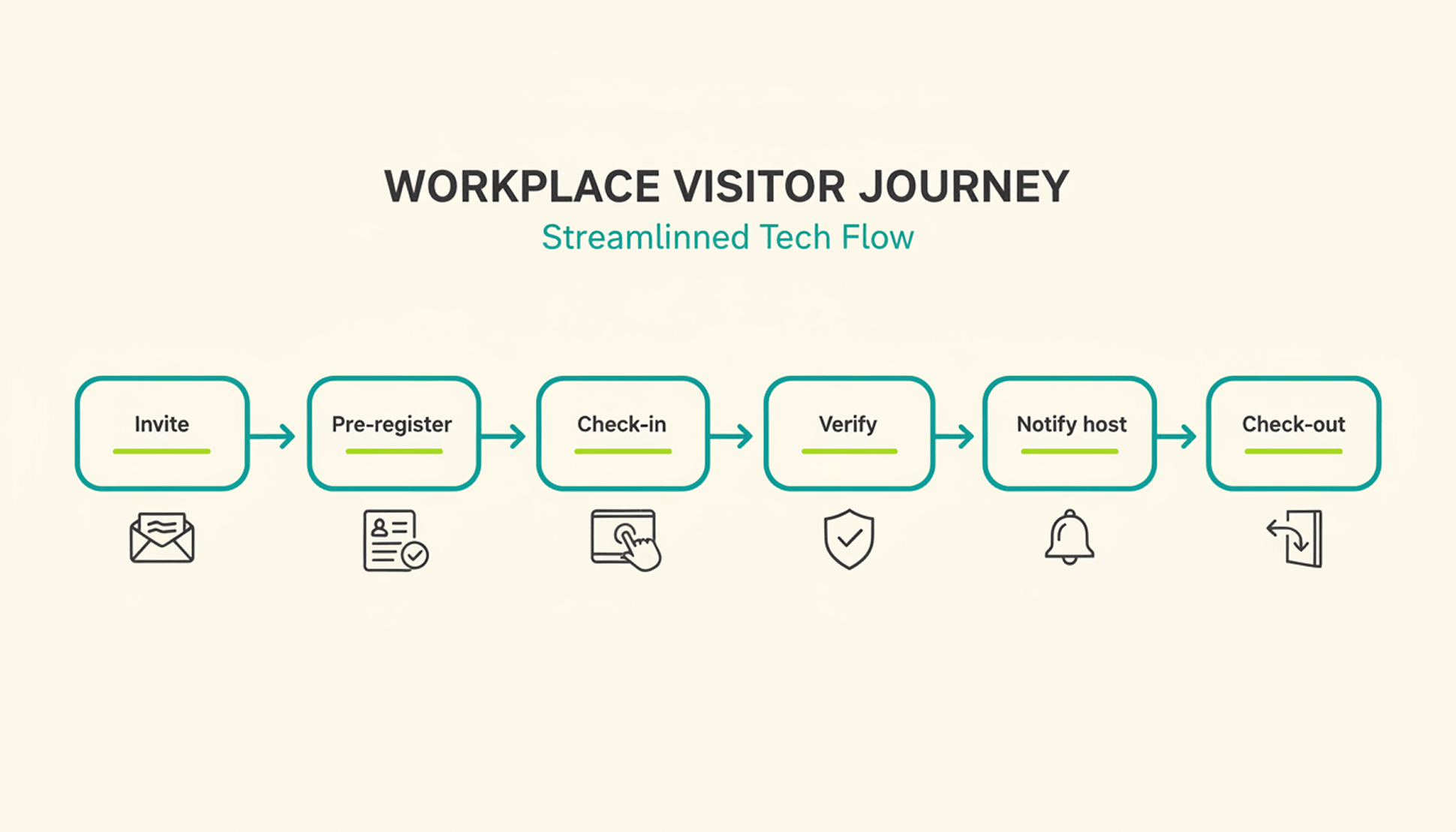
  • Guests check in at the kiosk, and the host immediately receives a notification in Slack or Microsoft Teams.
  • At the reception desk, guests sign NDAs, photo release forms and receive a visitor badge and privacy notices.
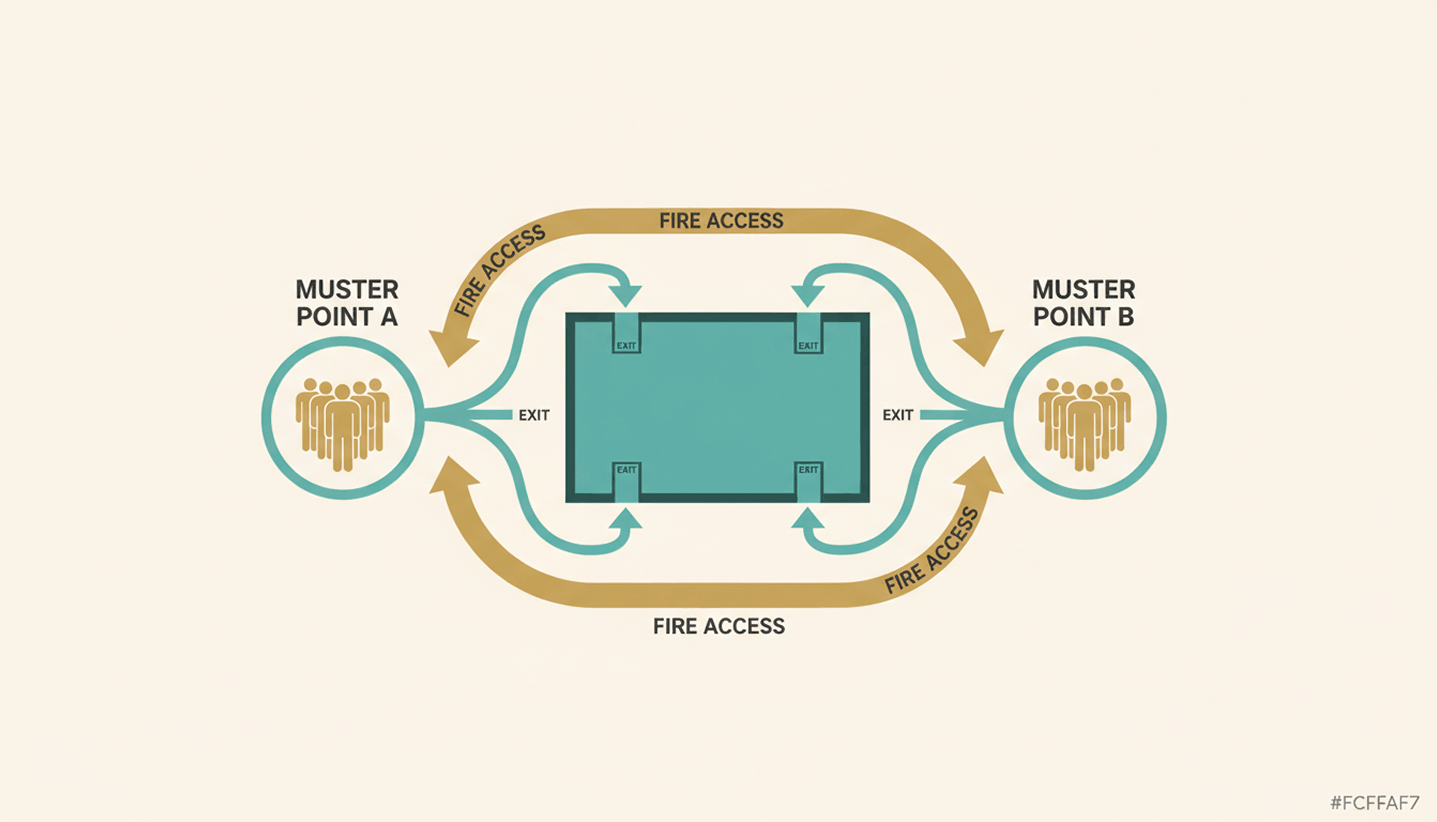
  • In an emergency, PULT generates an Emergency Export of all currently present individuals at the push of a button.
  • The weekly planner shows in advance how many employees will be in the office on the day of the event, so that room planning and space utilization can be coordinated.

{{onpage-cta}}

Office Insights

Workforce Analytics: Definition, Key Metrics, and EU-Compliant Implementation by 2026

Workforce analytics refers to the analysis of personnel data to manage headcount, productivity, and workforce planning. HR teams use this method to support personnel decisions with data. Starting in August 2026, the EU AI Regulation will tighten requirements for AI-powered HR analytics and mandate specific structures.

Workforce Analytics: The Basics

  • Workforce analytics is the quantitative analysis of HR data—such as turnover, absenteeism, headcount, and office utilization—to derive actionable recommendations for workforce planning.
  • Key metrics for workforce planning analytics include turnover rate, time-to-hire, absenteeism rate, office attendance, and team-level productivity metrics.
  • The EU AI Regulation classifies many HR analytics systems as high-risk AI starting in August 2026, imposing obligations regarding disclosure, human oversight, and data protection impact assessments.
  • PULT provides the data foundation for workforce analytics in hybrid teams—including attendance, desk utilization, and room bookings—and thus complements traditional HRIS systems such as Personio or HiBob.

What is workforce analytics, and how does it differ from people analytics?

Workforce Analytics focuses on the quantitative aspects of the workforce. It centers on headcount, productivity, turnover, and workforce structure in medium-term planning. People Analytics takes this a step further and also examines behavior, engagement, and collaboration based on qualitative data. HR Reporting, on the other hand, provides only retrospective reports without a forecasting component.

workforce analytics

In day-to-day work, these two areas are closely intertwined. When you implement your own workforce analytics, you create the data foundation for people analytics and the overarching workplace management.

Which metrics are suitable for workforce analytics?

Workforce Analytics uses metrics such as turnover rate, time-to-hire, absenteeism rate, office utilization, headcount trends, and others, which are regularly collected and analyzed. Together, these metrics provide an overview of how the workforce is evolving and which areas of the company are over- or under-staffed.

What tools are suitable for workforce analytics?

Workforce analytics tools can be divided into three layers. An HRIS layer as the data core (Personio, HiBob, Workday), an analytics layer for evaluation (Visier, Tableau, supplementary HRIS modules), and an office layer for attendance and space data in hybrid setups. The right combination depends on company size, data architecture, and EU compliance status.

When making your selection, consider the following five points:

  • Hosting region: EU hosting with a data center in Germany or elsewhere in Europe.
  • API Capability: Interfaces with HRIS, time tracking, and office management systems to eliminate data silos
  • EU AI Act Status: The provider documents whether and how its tool falls under the category of high-risk AI
  • Level of detail: Customizable KPIs and freely configurable dashboards
  • Office database: Attendance data, room and workstation reservations as well as visitor management
Tip: PULT Workplace Analytics includes this office layer and feeds attendance data, desk utilization, and room bookings into your workforce analytics pipeline, which can be combined with Personio or HiBob.

What does the EU AI Regulation 2026 require of HR analytics systems?

According to Annex III of the EU AI Regulation, an HR analytics system is considered high-risk AI as soon as it automatically supports personnel decisions. These include recruitment, promotion, termination, and performance evaluation. As a result, many workforce analytics functions are subject to strict requirements as soon as algorithms independently generate recommendations for or against individuals.

What requirements will apply to HR analytics systems as of August 2, 2026?

The high-risk classification gives rise to four key obligations for new systems:

  • Risk Management and Technical Documentation in accordance with Articles 9 through 11 of the EU AI Regulation
  • Human oversight for every decision involving personal data, not just at a later stage
  • Data Protection Impact Assessment pursuant to Article 35 of the GDPR, plus a Fundamental Rights Impact Assessment pursuant to Article 27 of the EU AI Act
  • Co-determination by the works council pursuant to § 87(1)(6) of the Works Constitution Act (BetrVG) in connection with any introduction or adjustment

How can I ensure that my workforce analytics setup remains compliant?

You can ensure compliance by clarifying your data architecture and processes before purchasing a tool. This involves five key points:

  • EU Hosting: Servers located in the EU, documented data processing.
  • Purpose limitation: You must document in writing which data you are analyzing and for what purpose.
  • Human final decision: No algorithm makes the final decision regarding hiring, termination, or promotion.
  • Disclosure: You proactively inform employees about what data is collected and how it is analyzed.
  • Involve the works council: A works council agreement fulfills the requirement for employee participation.

How to Build a Future-Proof Workforce Analytics System

Workforce Analytics provides you with a quantitative overview of your workforce, from headcount forecasts and turnover to office utilization.

Starting in the fall of 2026, the EU AI Regulation will require specific frameworks for high-risk AI, documentation, and human oversight. With PULT, you can meet these requirements while still gaining reliable data for your workforce planning and site strategy.

  • PULT Workplace Analytics provides real-time attendance, desk, and room data as a data source for workforce analytics.
  • Native integrations with Personio, HiBob, Microsoft Teams, and Slack, so all your HR data is centralized in one place.
  • EU hosting and ISO 27001 certification as the basis for your GDPR and EU AI Act documentation.

{{onpage-cta}}

Office Insights

Micromanagement: Consequences, Legal Risks, and the Path to Controlled Delegation

Micromanagement refers to a leadership style in which supervisors closely monitor their team’s tasks and constantly intervene. The consequences range from demotivation and resignations to legal risks arising from organizational negligence. However, by reducing micromanagement and delegating effectively, leaders can improve team performance while simultaneously reducing their own liability risk.

Micromanagement: The Basics

  • Micromanagement is a leadership style characterized by excessive attention to detail and constant interference in the team's tasks. Typical consequences include demotivation, a decline in personal responsibility, and above-average turnover rates.
  • Signs of a micromanaging boss include constant status updates, nitpicking over routine phrasing, requiring everyone to be CC'd on every email, and approval loops for trivial decisions.
  • Micromanagement carries legal risks because unclear responsibilities can lead to organizational negligence, and excessive monitoring of employees may violate § 26 of the Federal Data Protection Act (BDSG).

PULT is an all-in-one office management software solution that provides executives with a data-driven overview of hybrid teams through Office Insights, desk booking, and visitor management, without the need to micromanage operational details.

What is micromanagement, and how can you tell if you or your boss is doing it?

Micromanagement is a leadership style in which supervisors constantly monitor their employees’ performance and constantly interfere in their decision-making. Engaged leadership is clearly different, as it sets clear expectations for the outcome but leaves the path to achieving it open.

From an employee's perspective, the following patterns become particularly evident when a supervisor engages in micromanagement:

  • Routine work is proofread and the wording is fine-tuned—something that should have been done long ago
  • You'll be copied on every email
  • Independent decisions are subsequently called into question
  • We receive several status requests every week, even though clear deliverables have been agreed upon

If you are a manager yourself, ask yourself whether the following statements apply to you:

  • You systematically proofread your team's documents before they leave the office
  • You have routine decisions notified to you before they are implemented
  • You step in whenever tasks aren't handled the way you would handle them yourself
  • You ask for status updates more often than your team can deliver results

If you answer "yes" to several of these questions, it's a clear sign that your leadership style has slipped into micromanagement.

{{hint-box}}

What are the consequences of micromanagement for the team and the company?

The consequences of micromanagement affect both the team and the company:

  • Increased willingness to resign and rising turnover
  • Declining personal responsibility and innovative spirit within the team
  • The risk of burnout among employees is constantly monitored
  • Poorer strategic decisions because managers are bogged down in operational details
  • High follow-up costs due to recruiting, onboarding, and knowledge loss

Studies on willingness to quit, such as the Gallup Engagement Index, consistently show that micromanagement is one of the most common reasons for changing jobs. In addition to the human and economic consequences, the legal risks carry particularly serious weight for German companies.

What legal risks does micromanagement pose for managers?

The legal risks associated with micromanagement are rarely mentioned in HR practice, but they are substantial and affect three areas.

Organizational failure resulting from micromanagement

When a manager makes all decisions on their own, lines of responsibility become blurred. If damage occurs, it is difficult to determine clearly who failed to fulfill which duty. The case law of the Federal Court of Justice requires that tasks, authority, and responsibility be clearly assigned. Micromanagement undermines precisely this requirement.

Employee Data Protection under Section 26 of the Federal Data Protection Act (BDSG)

Close monitoring of employees, such as continuous screen monitoring or constant activity tracking, may violate employee data protection laws. Monitoring measures must be proportionate and based on a specific reason.

Delegation as a form of liability protection

A properly documented delegation of authority protects the manager in the event of a claim. Three steps ensure its legal validity:

  • Assign the written assignment , including specific expectations regarding the outcome.
  • Specify the person’s authority explicitly—that is, which decisions they are authorized to make on their own.
  • Agree on reporting milestones at which interim results will be reviewed.

What is the opposite of micromanagement?

The opposite of micromanagement is controlled delegation, often referred to as empowerment or trust-based leadership. In this approach, the manager transfers responsibility for results to employees and no longer controls the process, but rather the agreed-upon output.

  • Clear agreement on objectives with measurable results
  • A defined scope of decision-making within which employees are allowed to act independently
  • Agreed reporting points instead of constant monitoring

This approach is an absolute must, especially in hybrid teams. When managing remotely, you must shift your focus from presence to results, because you no longer have the ability to visually monitor your team.

Moving Away from Micromanagement: What Should a Manager Do?

Overcoming micromanagement is a process that starts with the leader. If you decide to break this habit, these five steps will guide you toward lasting change:

  1. Conduct a self-assessment: Identify your personal triggers. Do you step in because you’re afraid of making mistakes, because you need to be in control, or because you don’t trust the team’s technical expertise?
  2. Categorize tasks: Sort by importance and urgency. Keep broad, strategic issues on your plate; assign all operational tasks clearly.
  3. Define expectations in writing: Describe the desired outcome, but not the path to get there. This will prevent your team from having to be corrected later on for deviating from the plan.
  4. Establish a reporting schedule: Agree on regular check-ins instead of ad hoc inquiries. Weekly or biweekly meetings replace the constant back-and-forth about status updates.
  5. Use tools to stay organized: Software that shows you at a glance who is working where, when office hours are scheduled, and when teams are meeting eliminates the need to constantly ask around.

How to Lead Your Hybrid Team with PULT Without Micromanaging

Micromanagement is a leadership style that comes at a high cost. It drives good employees to quit, undermines the quality of decision-making within the team, and creates legal risks related to organizational negligence and data protection.

The solution lies in controlled delegation. Clear goal agreements, defined decision-making authority, and agreed-upon reporting points replace constant micromanagement. In hybrid teams, the right tools help ensure that you maintain an overview without micromanagement. With PULT, you can keep track of everything without micromanagement:

  • Real-time overview without having to ask: With PULT Presence, you can see on a digital office map who is currently on-site and who is working remotely. Check-in happens automatically via the company Wi-Fi, so you don't have to ask anyone.
  • Weekly planning right in your calendar: Scheduled days in the office and working from home appear in Outlook and Google Calendar, so you don't have to track status emails. Team days can be scheduled fairly and proactively based on this information.
  • Answers at the touch of a button instead of endless back-and-forth: The AI assistant instantly answers questions like “Who’s in the office tomorrow?” via a simple chat interface. No group emails, no follow-ups, no micromanagement.

Automatic synchronization with your HR system: Vacation and absence data from Personio or HiBob is automatically imported into PULT. You can plan team events based on up-to-date information, rather than manually collecting availability data from team members.

{{onpage-cta}}