Macro Management: Definition, Benefits, and Guide for 2026

Macro-management is a leadership style in which managers set overarching goals and guidelines rather than micromanaging day-to-day details. This approach is gaining importance as hybrid teams, new compliance requirements, and increasing reporting pressures push traditional micromanagement to its limits.

Macro Management: The Basics

  • Macro-management is a leadership style in which managers set strategic goals, a vision, and resources, and delegate the operational implementation to teams.
  • Unlike micromanagement, macromanagement relies on personal responsibility and focuses on results rather than individual tasks.
  • Macro-management is a preferred leadership practice in larger companies that face increasing reporting pressures due to hybrid teams and compliance requirements such as CSRD or NIS-2.
  • PULT handles day-to-day office management—including desk and room booking and workplace insights—so that executives have more time to focus on strategic management.

What is macro-management? 

Macro-management refers to a leadership style in which managers steer the company through vision, overarching goals, and resource allocation. They delegate day-to-day operational tasks to teams that make independent decisions within a defined framework. The focus of leadership is on the outcome rather than on individual steps.

At the management level, macro-management is part of strategic leadership—that is, the highest level of corporate management. Below that are tactical management (division management, quarterly planning) and operational management (day-to-day business, process control). Under the macro-management approach, you largely stay out of the lower two levels.

Unlike laissez-faire (French for “let it be”), macro-management requires established guidelines, sets clear expectations, and schedules regular reviews. Within this structure, however, the team makes its own decisions. If you mix the two, you could slip into micromanagement or cause confusion within the team.

What is the difference between macro-management and micro-management?

The biggest difference between macro-management and micro-management lies in whether, as a manager, you control your employees’ results or their work processes. Micro-management focuses on the how, while macro-management focuses on the what and why.

Micromanagement isn't inherently wrong. In crisis situations, when onboarding new team members, or when dealing with highly regulated processes, close oversight makes sense.

What are the benefits of macro-management for hybrid teams?

Macro-management works for distributed teams because the underlying focus on results is not tied to a specific location. Work outcomes can be measured equally well regardless of whether employees work in the office, remotely, or prefer a hybrid approach. Micromanagement, on the other hand, fails due to the sheer logistics of hybrid setups.

A second benefit is that it takes the pressure off managers. Instead of checking daily office routines and individual tasks, they have time to focus on strategic issues. These include, above all, CSRD reporting, AI governance in accordance with the EU AI Act, and cyber compliance under NIS-2.

Third, macro-management reduces bottlenecks. When every decision has to go through a manager’s desk, it can bring an organization of a certain size to a standstill. Delegating decision-making authority, on the other hand, spreads the load.

Where does macro-management reach its limits?

Macro-management reaches its limits in situations where your team needs clear instructions rather than being left to take initiative on their own: during the onboarding phase for new employees, in acute crisis situations such as cyberattacks, and in highly regulated processes with audit requirements. In these three scenarios, close supervision is the appropriate leadership approach.

  • New team members with no experience need clear instructions and closer guidance. Anyone who assigns full responsibility to someone without proper training risks overwhelming them and leading to poor decisions. In this case, a hybrid approach combining coaching and selective micromanagement is more appropriate.
  • In acute crises, such as security incidents or cyberattacks, quick and clear leadership is essential. Consensus-based decisions take time, which is simply not available in such moments. Macro-management is counterproductive in this context.
  • Highly regulated processes such as compliance audits, data protection approvals, or financial approval processes require micromanagement in accordance with established guidelines. Deviations made on one’s own initiative tend to pose a risk in these cases. In such situations, macromanagement can serve as the default approach, while micromanagement can be used as a deliberate exception.

Guide: How Do I Implement Macro Management?

Implementing macro-management means first setting overarching goals, then delegating decision-making authority, automating routines where possible, establishing review cycles, and finally building a robust database. Each of these five steps is a prerequisite for the next:

  • Step 1: Define strategic goals and guidelines. Set clear OKRs or KPIs for quarters and years. The team needs to understand what their work contributes to. Without this focus, macro-management quickly devolves into laissez-faire.
  • Step 2: Explicitly delegate decision-making authority. Document which decisions the team makes on its own and which ones are escalated to management. A RACI matrix or a simple list of responsibilities works well for this.
  • Step 3: Automate operational routines. Desk booking, room reservations, and visitor management don’t belong on a manager’s desk. Your focus should be on numbers and analytics.
  • Step 4: Establish review cycles. Regular one-on-one meetings, monthly team reviews, and quarterly strategy reviews form your framework.
  • Step 5: Build a data foundation. Far-reaching decisions become sound when real data is available. Office utilization, attendance patterns, compliance reports, and ESG metrics provide the foundation for senior management.
Tip: With PULT Presence, you can track your teams' attendance automatically without needing their help. Get occupancy data and analyze the utilization of your workspaces.

How does macro-management work with remote work and hybrid teams?

The ability to manage the big picture in a hybrid office environment depends on what data is available to senior management for making decisions about space, teams, and compliance.

In a hybrid work environment, office occupancy fluctuates from day to day, as there are almost always some colleagues working remotely. Some popular areas of the office remain consistently overcrowded, while others are nearly empty. Without concrete data on this, your planning will be based more on daily impressions than on actual evidence.

Attendance data, room booking patterns, and visitor traffic are therefore essential to your management.

This is particularly evident in ESG reporting. The CSRD (Corporate Sustainability Reporting Directive) requires companies above a certain size to report data on, among other things, office occupancy and energy consumption. If you already track these metrics automatically in your office management system, you can easily transfer them directly into your reports.

For office managers and workplace coordinators, this means that hybrid work and macro-management work best together when you collect data at the grassroots level—and do so as automatically as possible.

Here's how to automate macro management with PULT

Macro-management requires data. After all, unless you know how spaces are being used, who is on-site and when, and which areas are chronically empty or constantly overcrowded, you’ll be making decisions based mainly on guesswork or, at best, half-hearted headcounts. PULT collects all this data automatically and in compliance with GDPR.

PULT Presence serves as the foundation for this: The system automatically detects which employees are actually in the office via the Wi-Fi connection of their laptop or smartphone. No check-in, no manually maintained list, no required responses.

This data is fed directly into PULT Workplace Analytics. The result is reliable reports on the actual utilization of spaces, rooms, and zones. You and your managers can see which areas are consistently underutilized, which bookings are regularly left unused, and how utilization patterns evolve over months and quarters.

You can request reports from the AI assistant by saying: “Give me the occupancy report for Building A from last week.”

  • Automatic presence detection: The Wi-Fi signal detects who is in the office without the need for check-ins or manual lists within the team
  • Workplace Analytics: Occupancy reports for spaces, rooms, and zones as a basis for real estate and ESG decisions.
  • AI Scenario Planning: Simulate how staff growth or new hybrid models will affect your space requirements.

AI Assistant: Generate reports on command via chat, without having to search through the dashboard or the data yourself.

Real data and analytics for your macro management!

  • ✓ Get real-time data on attendance and utilization in PULT. Make informed decisions that you can back up with evidence.
Start free trial

With PULT Presence, you can track your teams' attendance automatically without needing their help. Get occupancy data and analyze the utilization of your workspaces.

Trusted by 1000+ innovative workplaces
FAQ

Have questions?

What distinguishes macro-management from the laissez-faire leadership style?

Macro-management sets overarching strategic goals, guidelines, and review processes. Laissez-faire management does away with this structure and leaves both goal-setting and oversight entirely up to the teams. Together, these two approaches form an unfavorable combination and tend to lead to either overwhelming workloads or a complete lack of direction within the team.

What size of company is macro-management suitable for?

Macro-management becomes effective starting at around 30 to 50 employees, because at that point the scope of tasks to be managed makes detailed oversight practically impossible. In smaller teams, founders and management typically combine macro- and micro-management, since dedicated management levels have not yet been established. Once a company reaches 100 employees, macro-management becomes essential.

What tools support macro-management in hybrid teams?

Hybrid teams need tools that provide a reliable data foundation and automation. PULT, as an all-in-one software solution, combines desk booking, room booking, visitor management, and analytics, and provides the attendance and utilization data on which macro-management decisions are based. In addition, OKR tools, collaboration software such as MS Teams or Slack, and HR systems like Personio are used. PULT can be integrated with these systems.

How does PULT help office managers with the macro-management approach?

PULT handles all operational tasks related to desk and room reservations, visitor management, and parking lot administration. This frees up hours each week for office managers, which they can then invest in areas such as space planning, workplace strategy, or ESG reporting. PULT’s workplace analytics provide the data needed to make precisely these decisions.

About author

Isolde Van der Knaap

Hybrid Work Enthusiast and Account Executive

At PULT we're designing the future of the hybrid workplace for companies and their employees. Focused on SME and mid market customers in Eruope, I'm working on everything from Customer Discovery to Onboarding. I'm very passionate about new work and moved to Hamburg in 2024 even though I'm originally from France.

Resources

Learn how to run better workplace operations

Office Insights

Open-Concept Office: Pros and cons, design, and modern concepts

An open-concept office is an open workspace where many employees work together without partition walls. Noise, a lack of private spaces, and constant interruptions are considered the biggest drawbacks of open-concept offices. However, you can solve these very problems through zoning, well-designed soundproofing, and skillful space planning.

Open-concept Office: The Most Important Points at a Glance

An open-concept office refers to an open workspace for multiple teams without fixed partitions and is one of the most common office concepts in companies that adopt a hybrid work model.

The biggest drawback of open-concept offices is the noise level: noise and acoustic distractions are among the most commonly cited causes of loss of concentration and declining productivity in open-concept offices.

Zoning, acoustic partitions, and sound-absorbing materials solve the core problems in open-concept offices because they physically separate areas for concentration, communication, and relaxation.

PULT makes it possible to plan open-concept offices: Through Desk Booking and Office Insights, the software shows which zones are actually being used and provides occupancy data for space planning tailored to actual needs.

What is an open-concept office?

An open-concept office (or open-plan office) is a contiguous office area in which more than ten employees work in an open space without floor-to-ceiling walls. It differs from a cubicle office in its open structure and from purely open-space areas in that it has clearly defined functional zones.

How does an open-concept office differ from a traditional office?

Office types can be classified based on how the space is divided. From cubicle offices with individual rooms to combination offices and open-concept offices, the openness of the space increases gradually.

A modern open-concept office combines open workspaces with activity zones—areas each designed for a specific task. It is precisely this zoning that distinguishes this well-thought-out concept from a simple desk arrangement.

For hybrid teams, an open floor plan makes particular sense. When part of your workforce is working from home, shared workspaces allow for much more efficient use of space than permanently assigned individual offices.

What are the pros and cons of open-concept offices?

Open-concept offices offer short lines of communication and high space efficiency, but their main drawbacks are noise and a lack of private spaces. The balance between these two factors determines whether the space is productive or stressful.

What are the advantages of an open-concept office?

The advantages of an open-concept office lie in collaboration and cost savings. Teams can easily coordinate with one another; these discussions take place without the need to schedule appointments, and new employees are able to integrate more quickly.

Added to this is the financial benefit. An open-concept office with shared workstations significantly reduces per-capita office costs, especially in companies where a high percentage of employees work from home.

Short lines of communication: Teams coordinate with one another without organizational hurdles.

Greater space efficiency: Shared workstations reduce costs per employee.

Greater transparency and visibility: You can immediately see who is present and what people are working on.

Faster onboarding: New colleagues learn the processes by working closely with the team.

What are the disadvantages of an open-concept office?

The biggest drawback of open-concept offices is the noise level. Conversations, phone calls, and keyboard clicks all blend together, and it is precisely this acoustic distraction that is one of the most common reasons why concentration suffers in an open-concept office.

In a controlled laboratory experiment, a research team at Bond University demonstrated that typical open-concept office noise increases negative mood by 25% and the physical stress response by 34%—as measured by heart rate and skin conductance—after just eight minutes of noise exposure. In real-world office settings, where employees are exposed to these noise levels for hours on end, these effects are correspondingly more pronounced. (Sander et al., Journal of Management & Organization, 2021)

Open-concept office layouts also significantly reduce face-to-face communication. In two field studies conducted with Fortune 500 companies, the volume of face-to-face interaction dropped by about 70% after the transition to an open-concept layout, while email and instant messaging traffic increased sharply. People who are constantly visible to everyone tend to withdraw inwardly and turn to digital channels. (Bernstein & Turban, Philosophical Transactions of the Royal Society B, Harvard Business School, 2018). The availability of private spaces is therefore an important factor in well-being.

How do I design a modern open-concept office?

A productive and employee-friendly open-concept office is created through spatial zoning based on activity, effective soundproofing, and space planning based on actual usage data. However, furniture and rules alone are not enough if the basic layout of the space does not suit the way people work.

How does zoning work in an open-concept office?

Zoning divides the open space into areas for different activities. This principle stems from the activity-based working concept, in which each type of work is assigned its own appropriate space:

Quiet areas for concentration and quiet, independent work.

Opportunities for collaboration.

Customizable project areas for teamwork and time-bound projects.

Quiet, secluded areas for breaks and relaxation.

This allows employees to choose a workspace that suits their current task and ensures they have the best possible conditions there.

What type of soundproofing is suitable for an open-concept office?

Effective soundproofing in an open-concept office is achieved through sound-absorbing materials and physical barriers. The combination of elements on the ceiling, on the floor, as well as room dividers and large plants reduces the noise level.

Acoustic partitions between workstations block sound directly at the source.

Large plants with lush foliage also act as natural sound barriers.

Upholstered furniture and upholstered room dividers absorb sound.

Floor-to-ceiling partitions in an open-concept office separate zones from one another both acoustically and visually.

Acoustic panels on the ceiling and walls, sound-absorbing carpeting and rugs, and enclosed phone booths for video calls significantly reduce noise levels.

In cases where noise levels remain high despite these measures, the cause usually lies in the use of the space itself.

How does Desk Booking help optimize space in an open-concept office?

Desk Booking provides the data needed to plan an open-concept office according to actual needs. Rather than relying on assumptions, booking and occupancy data show which areas are regularly in use and which, by contrast, remain empty.

This leads to specific ways to adapt the space that allow for the redistribution and management of its use. For example, if the area designated for quiet work is consistently overbooked while spaces for collaboration remain empty, this is a measurable indicator that the layout needs to be redesigned.

PULT provides the necessary occupancy data: This allows you to analyze the use of your office space, and employees can reserve their seats in the appropriate zone.

How to Turn Your Open-Concept Office Into a Productive Workplace

An open-concept office becomes productive through zoning based on activity, effective soundproofing, and space planning based on actual usage data. The open space is preserved, and its weaknesses are eliminated through the right structure.

With PULT Office Insights, you can see which areas of your space are actually being used and plan renovations based on real data.

Your employees can reserve a workspace in the appropriate zone and see where their colleagues are already seated.

You manage capacity and attendance all in one place.

{{onpage-cta}}

Office Insights

Workplace Automation: What does it really mean for your office?

Workplace automation refers to the automation of daily, recurring office tasks, from desk reservations to visitor registration. For companies with a hybrid work model, the question arises as to which processes can be automated and how this can be done in compliance with the GDPR.

Workplace Automation: The Basics

Workplace Automation automates recurring office processes—such as room and desk reservations, attendance tracking, and visitor management—based on rules, without requiring employees to manually initiate each step.

You can identify office processes that are ready for automation by three characteristics: clearly definable rules, a high frequency of repetition, and a measurable susceptibility to errors when processed manually.

SMEs must ensure compliance with three requirements before launching: GDPR-compliant data storage, involvement of the works council (Section 87 of the Works Constitution Act), and adherence to EU hosting standards to avoid issues related to the Cloud Act.

PULT is an all-in-one office management platform that automates desk booking, room reservations, office analytics, and visitor management, and integrates fully with MS Teams, Personio, and Slack so your office runs without any manual intervention.

What is workplace automation

Workplace automation encompasses all software-driven office processes in which a defined rule or algorithm determines the next step.

This ranges from automatic booking confirmations to rescheduling meeting rooms when the number of participants does not match the room size. In this way, workplace automation goes beyond mere digitization measures. Digitization converts paper forms into machine-readable data. Automation handles the resulting tasks on its own.

Which office processes can be automated?

Processes that occur daily and always follow the same or a similar pattern are ready for automation.

Area Manual Process Automated version
Space & Workplace Booking meeting rooms, spaces, and workstations by arrangement, via a list, or by email. Self-booking with automatic confirmation
Space & Workplace Identifying and Resolving Duplicate Bookings Automatic detection and rebooking in the event of capacity conflicts
Space & Workplace Send a reminder for your own desk reservation Automatic push notification to the user
Space & Workplace Coordinate Parking Assignments Using a Spreadsheet Automatic assignment of parking spaces based on predefined booking rules
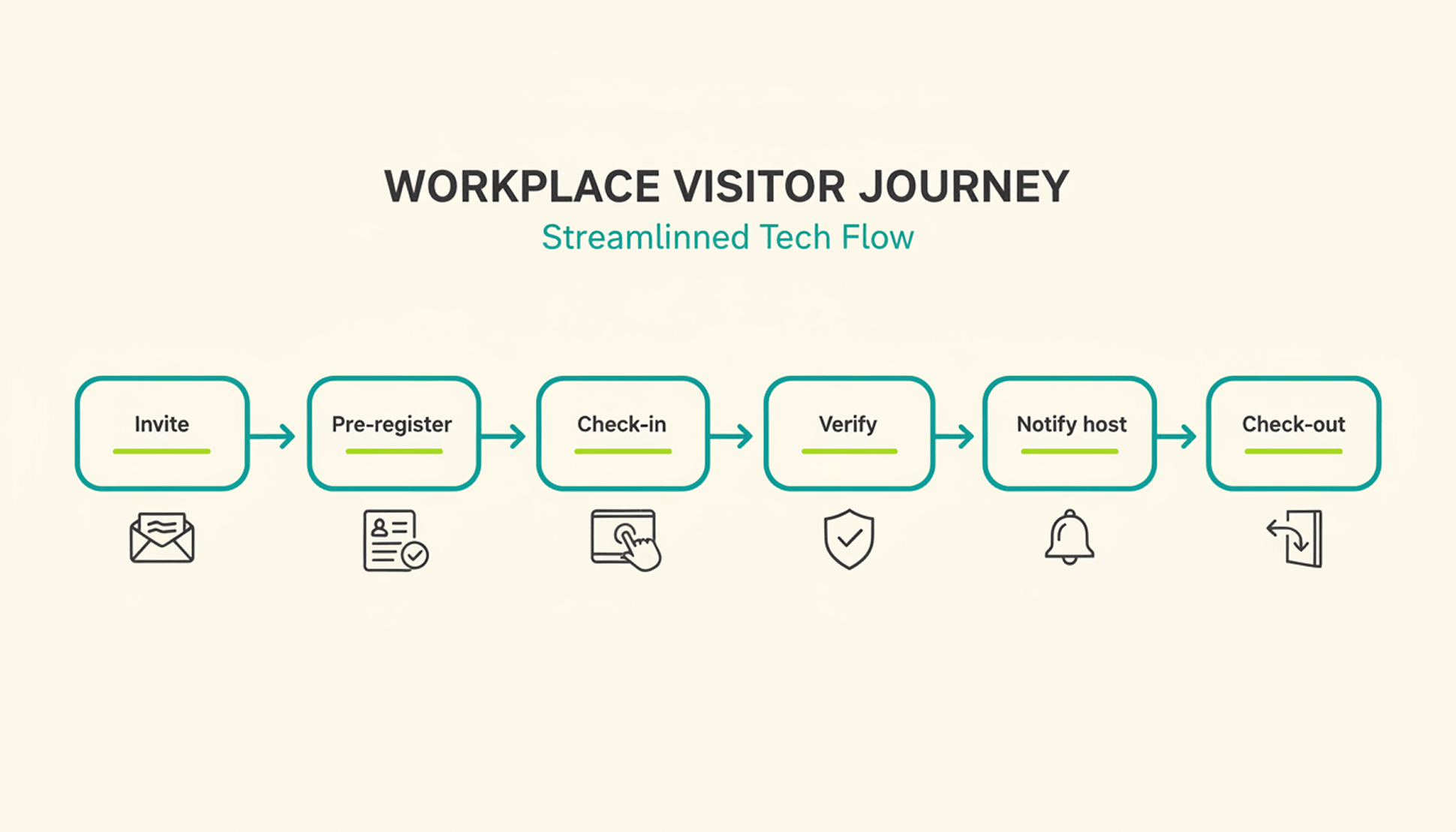
Visitor Management Visitor Registration at the Front Desk Paperless Self-Registration with GDPR-Compliant Data Collection
Visitor Management Notify the host by phone when visitors are arriving Automatic notifications via MS Teams or Slack
Office Evaluation Track Office Utilization Using Handouts Real-Time Analysis of Office Usage
Office Evaluation Compile capacity utilization reports yourself Automatically generated reports based on occupancy data
Human Resources Management Manage Leave Requests via Email Automated approval process with status notifications
Human Resources Management Create and Send Onboarding Checklists Automated task assignment and access granting upon admission
Attendance & Planning Who is in the office and when? Check with them to find out. Real-Time Automatic Attendance Overview
Attendance & Planning Coordinate office days with the team via chat Rule-Based Scheduling with Attendance Thresholds
IT & Access Manually Set Up Access for New Employees Automatic Assignment of Permissions via SSO and HR Integration
IT & Access Access Control by Reception Staff Automated access control via app or badge
Buildings & Facilities Cleaning schedules based on a fixed weekly plan Cleaning Based on Actual Room Usage
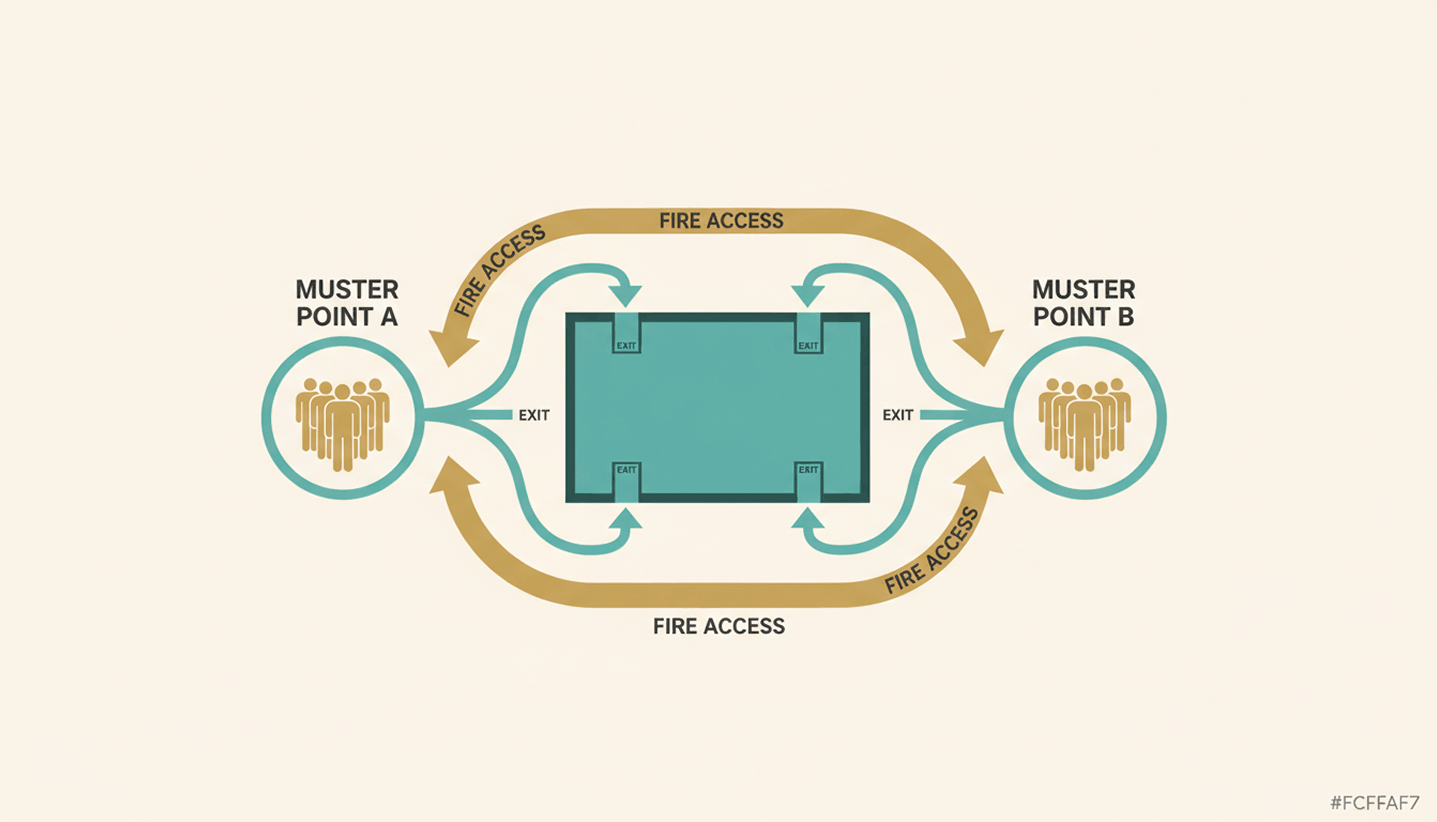
Compliance & Security Manually Maintain Attendance Lists for Fire Safety Real-time occupancy data as the basis for evacuation plans

How does automated room and desk booking work?

For example, an automated meeting room management system detects when two people book a conference room that is actually designed to accommodate 20 people. The system identifies the discrepancy and automatically rebooks the reservation into a smaller, suitable room.

This reduces the number of conflicts over available spaces and frees up time for office managers that was previously spent on manual adjustments. Workplace automation via Wi-Fi check-in takes this a step further: As soon as you log in to the office with your device, the system automatically reserves your desk without a single click.

What compliance considerations must a company keep in mind when implementing workplace automation?

Automating office processes always involves processing data. Therefore, three points must be clarified:

GDPR Compliance: What data does the tool collect, how long is it stored, and who has access to it? Booking data and attendance records are considered personal data.

Employee Participation: As soon as a tool tracks attendance or workload, Section 87(1)(6) of the Works Constitution Act (BetrVG) applies. You must consult with the works council before implementing it.

Hosting: EU hosting with a German or European data center circumvents the Cloud Act issues that arise with U.S. providers without an EU branch.

How do I get started with Workplace Automation?

To automate your workplace, start by identifying all the processes that, although they follow a very consistent pattern, are repeatedly carried out manually by employees. Review these processes and provide your team with software to automate them. The more processes a single software solution can handle, the fewer new tools you'll need to burden your team with.

1

Identify processes: Which processes take more than 30 minutes each day or regularly produce errors? These are the first candidates.

2

Examine the process: Is the current process already the best option? Or could it be streamlined?

3

Select a tool based on its integration capabilities: EU hosting and integration with existing systems are important selection criteria.

4

Roll out the changes gradually: Start with one feature—such as automatic room booking—and then expand to other areas after receiving positive feedback.

5

Review KPIs after 4 weeks: How many booking conflicts remained? How much administrative time was saved? How has office utilization changed?

Here's how PULT puts your office management on autopilot

Your workplace automations work best when they're bundled into a single software solution rather than spread across multiple tools. You can bundle workstation and room reservations, presence detection, occupancy analysis, visitor management, and parking management into PULT:

Desk booking, room booking, and office analytics are all handled in a single tool, without any integration issues between individual systems.

Automatic presence detection via your existing Wi-Fi system.

Office Insights provide data and analyses on office utilization.

Full integration with MS Teams, Slack, Personio, and HiBob.

{{onpage-cta}}

Office Insights

Huddle Meetings: How to make daily team check-ins truly productive

A huddle meeting is a daily or regular team check-in that takes no more than 15 minutes to align priorities and identify roadblocks. The difference from a traditional status meeting lies in its structure and in what you consistently leave out afterward.

Huddle Meeting: The Basics

A huddle meeting is a regular team check-in limited to 10 to 15 minutes, with three set questions: What was completed yesterday? What's on the agenda for today? What's currently holding the team back?

The Daily Huddle meeting format works whether held in person or virtually, without an agenda document and with a rotating spokesperson. Anything that goes beyond the three core questions should be addressed in follow-up discussions afterward.

For hybrid teams, team huddle meetings require some ground rules: cameras on, a fixed time zone, a breakout channel for follow-up discussions, and GDPR-compliant policies for recording.

PULT, the all-in-one software for hybrid office management, shows moderators in real time every day who is in the office and who is working remotely. This provides a reliable information basis for every huddle meeting before it begins.

What is a huddle meeting?

A huddle meeting is a short, structured team discussion of a fixed duration (10 to 15 minutes) that takes place daily. The goal is to coordinate efforts. Discussions should be held in separate follow-up meetings. Each team member answers the same three questions:

1

What did I finish yesterday?

2

What do I have to do today?

3

What's holding me back right now?

The concept originates from Scrum, where the daily huddle is known as the daily standup. It is now also used by HR, operations, and sales teams, as well as cross-functional teams that coordinate across locations.

What is the proper format for a huddle meeting?

The huddle meeting format requires three key conditions to be effective: strict adherence to the schedule, the assignment of a facilitator, and a fixed list of participants.

1

Duration and Timing. The Daily Huddle Meeting takes place at the same time every day. Exceptions weaken the routine. The maximum duration is 15 minutes. If you regularly go over that time, you should consider whether parts of the content belong in a separate format.

2

Participants. Only individuals who are directly dependent on one another. Larger departments are divided into smaller subgroups.

3

Facilitator's Role. A facilitator keeps track of time and consistently directs discussions toward follow-up conversations. Rotating facilitation fosters a sense of personal responsibility within the team.

Element Standard Remote/Hybrid
Duration 10 to 15 min. 10 to 15 min.
Format While standing Camera on
Moderation Rotating Specified
Follow-up meetings Right after that Breakout Channel
Minutes Optional Note Short Chat Log

What changes in the team huddle meeting in a hybrid office?

In teams where some members are in the office and others are working remotely, three issues arise that could undermine the format: remote participants become passive listeners, discussions in the plenary session get out of hand, or technical problems delay or prolong the meeting.

Checklist for Hybrid Team Huddle Meetings:

Cameras are required for all participants, including office groups sharing a screen.

Real-time chat in the team chat during the meeting.

Breakout session or a fixed time slot on the calendar for follow-up meetings immediately afterward.

A fixed meeting link and time zone in everyone's calendar.

Facilitating from a remote setting to ensure that remote participants are on an equal footing in terms of structure.

Clear hybrid work policies are essential for this model to work for everyone involved.

What legal considerations must companies keep in mind during their daily huddle meetings?

Daily huddle meetings count as work time and must be documented as part of time tracking. This also applies to brief 10-minute check-ins.

If you record video huddles, you need a GDPR-compliant legal basis and must inform participants in advance. If the huddle format is used for regular performance monitoring, a company agreement may also be required.

How to Make Huddle Meetings a Permanent Part of Your Hybrid Team

A huddle meeting is only effective when time management, structure, and the facilitator's role work together seamlessly. In a hybrid work environment, a fourth factor comes into play: transparency about who is working, when, and from where. Daily check-ins help to improve the employee experience because coordination routines become reliable and transparent for everyone.

Use PULT to see where your colleagues are working

PULT shows you at any time who is in the office and who is working remotely. You can also see your colleagues' scheduled attendance and receive reports on your teams' attendance. Desk booking, room booking, visitor management, and office insights are all integrated into a single platform.

{{onpage-cta}}