Practical guides for office managers building better hybrid workplaces. Learn how to optimize space utilization, automate operations, and support distributed teams.
Oops! Something went wrong while submitting the form.
Visitor Management
Visitor Management System: What It Is and How It Works
A visitor management system replaces the paper sign-in sheet with a digital process that screens, logs, and tracks every guest who enters your office. It captures who's on-site, notifies the host, and creates a searchable record for security and compliance reviews. For growing offices, this single change closes a security gap most reception desks still carry today.
A visitor management system digitizes guest check-in, replacing paper logs with pre-registration, badge printing, host notifications, and a searchable visitor record.
✓
Visitor management software reduces front-desk workload while creating the audit trail organizations need for security screening and regulatory compliance.
✓
A standalone visitor tracking system solves check-in but leaves desk booking, room booking, and office data in separate tools, creating gaps in a company's overall presence picture.
✓
PULT combines visitor management with real-time presence, desk and room booking, and emergency response in one platform, so security teams see who's on-site, employees and visitors alike, from a single source of data.
What Is a Visitor Management System?
A visitor management system is software that replaces the manual guest sign-in process with a digital, trackable one. It records a visitor's details, their arrival and departure, and notifies the employee they're there to see, all without a paper logbook at the front desk.
Companies adopt one for three reasons: security, compliance with regulations like GDPR, and a faster, more professional check-in experience for guests.
Standalone check-in tools handle the front desk in isolation. Platform-based visitor management, like PULT's, feeds that same data into a company's broader presence and office management system, so security teams see visitors and employees in one place.
What Does a Visitor Management System Do?
A visitor management system replaces manual sign-in with a digital workflow that handles the entire guest experience, from pre-registration to check-out. It records a visitor's details, notifies the right host, can issue a badge, and stores visits in a searchable log. Visitor management software runs this process on a tablet, kiosk, or mobile phone instead of a clipboard.
Core Features of a Modern Visitor Management System
✓
Pre-registration and invites: hosts send a visitor a link before arrival, with the visit details and parking or building information included.
✓
Self-service check-in: guests confirm their name, host, and purpose at a kiosk or tablet in under a minute.
✓
Optional ID and watchlist screening: depending on the platform, the system can check visitor IDs or flag names against a security or denied-entry list before a badge is issued.
✓
Badge printing and QR codes: guests can receive a visible, time-stamped credential that identifies them for that day's visit.
✓
Host notifications: the employee being visited gets an instant alert by email, Slack, or Teams, with the guest's details and, if enabled, a photo.
✓
NDA and agreement signing: legal documents are signed digitally during check-in, with a copy stored automatically for compliance records.
✓
Visitor logs and reporting: every visit is timestamped, searchable, and exportable, so front-desk trends are easy to review monthly.
✓
Emergency roll-call export: the current visitor list can be pulled during an evacuation, showing who is recorded as still in the building.
Visitor Management Software vs. a Paper Logbook
Criterion
Paper Logbook
Visitor Management Software
Data accuracy
Illegible entries, missing fields
Structured, mandatory fields
Security screening
None
Watchlist and ID checks
Emergency roll call
Manual count from paper
Instant, exportable list
Compliance records
Hard to search or retire
Searchable, with retention rules
How Does the Visitor Journey Work, From Invite to Check-Out?
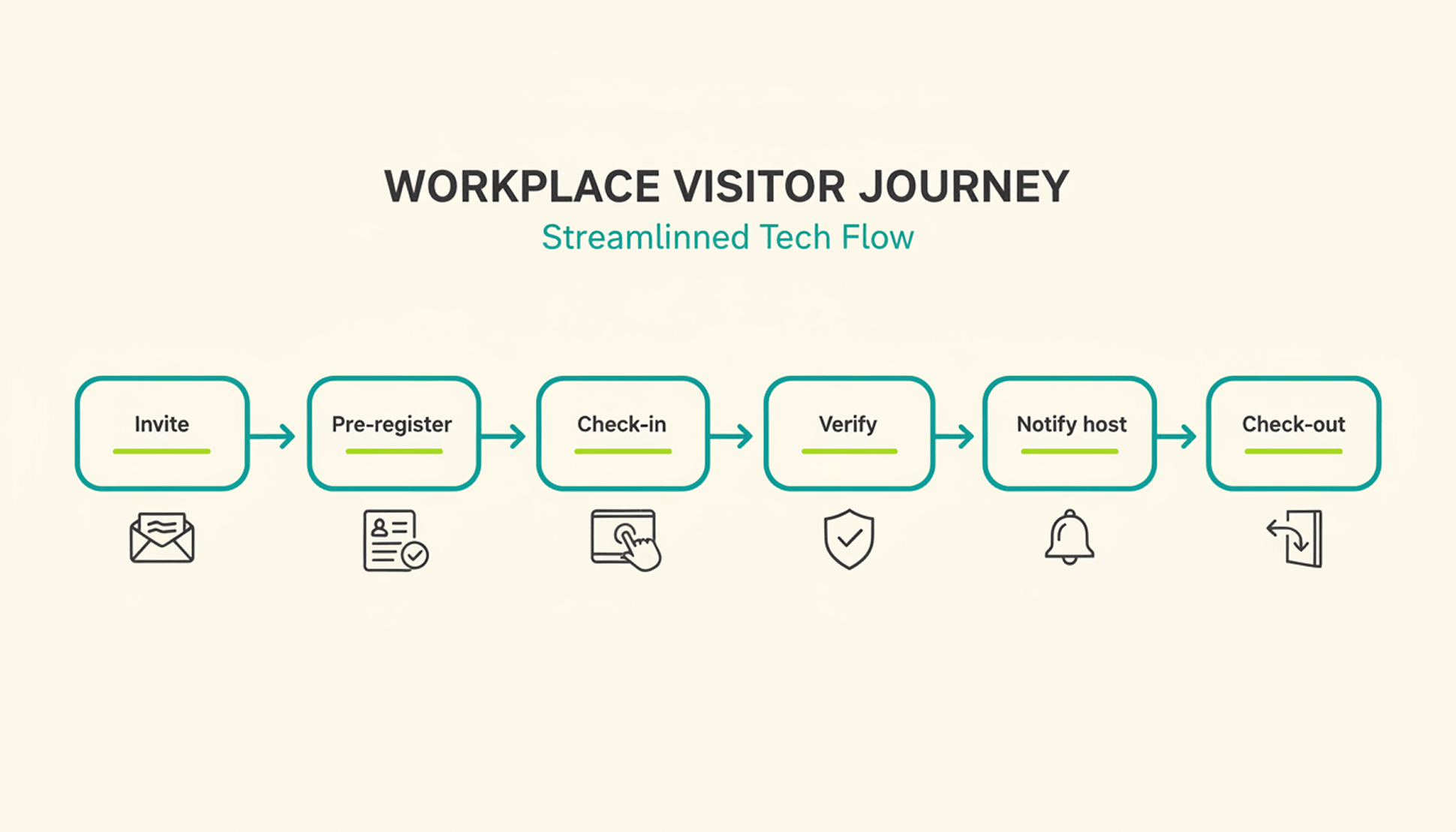
A typical visit runs through six steps. The host sends an invite, the visitor pre-registers, the visitor confirms their details on arrival, a badge can be issued, the host gets notified, and the system records check-out when the visitor leaves or at a configured time.
1
Pre-registration: the host schedules the visit and sends a link with arrival details, parking instructions, and building access notes.
2
Arrival and check-in: the visitor confirms their details at a kiosk or on a tablet or their own phone, usually in under a minute.
3
Optional identity and watchlist verification: depending on the platform and configuration, additional ID or security-list checks can be performed before building access is granted.
4
Badge issuance: a printed or digital badge identifies the visitor for the building and can be limited to that day's visit.
5
Host notification: the employee being visited receives an instant alert to come to reception, with the visitor's name and, if enabled, photo.
6
Check-out and logging: the visitor checks out on departure, or the system can close the visit automatically at a configured time, keeping the record administratively up to date.
What Are the Benefits of a Visitor Management System for the Office?
The clearest benefit is a complete, searchable record of who was on-site and when, something a paper log or verbal check-in can't provide.
Security and Compliance Benefits
A visitor management system can screen guests against a watchlist before they reach the office floor, depending on the platform and configuration. It can keep a timestamped log of visits for security and compliance reviews. Under GDPR, visitor data counts as personal data, so it needs a lawful basis for collection, an appropriate retention period or criteria for determining it, and safeguards against unauthorized access. A digital system can support these controls directly in the check-in process, reducing reliance on manual steps.
Visitor accountability also matters during an emergency. OSHA guidance notes that visitors need to be accounted for after an evacuation, and many employers use the sign-in list to run that headcount. A missing name on that list can delay an all-clear by several minutes, minutes that matter during a real evacuation.
Because PULT Presence tracks employees and visitors in one live view, a facilities team can pull an accurate roll call the moment an alarm sounds, not after searching through a paper binder.
Front-Desk Efficiency and Visitor Experience Benefits
Automated check-in cuts the time your team spends on manual sign-in, badge writing, and phone calls to announce a guest. A receptionist freed from clipboard duty can focus on greeting visitors and other front-desk work. Visitors move through reception faster, often in under a minute, and the first impression of your office improves the moment someone walks in the door. For client meetings or investor visits, that faster, more polished check-in becomes part of how your company presents itself.
How Do You Choose the Right Visitor Management Solution?
The right visitor management solution depends less on feature count and more on how well it fits your existing security setup, office size, and tool stack. A system built for a five-person startup office looks very different from one built for a 500-person campus with multiple buildings and a dedicated security team.
Calendar, HR, and communication tools your team already uses
Security and compliance
Data retention controls, audit logs, GDPR-aligned handling
Scalability
Pricing and setup across multiple locations
Price
Per-location vs. per-user pricing models
Ease of use
Kiosk setup time and how quickly staff can learn the system
Is a Standalone Visitor Management Platform Enough for a Modern Office?
A standalone visitor management platform solves the front-desk problem, but most offices also run desk booking, room booking, and parking through separate tools. Connecting these systems into one platform gives security and facilities teams a single, live view of who is on-site, employees and visitors together.
That connection matters most during a security incident or an office move, when facilities teams need one current view of occupancy rather than four separate logins to check. PULT pairs visitor management with desk booking software, room booking, and presence data, so a single dashboard shows recorded on-site employees and visitors. Office managers evaluating a broader workplace management software setup typically start here, since visitor data becomes far more useful once it's connected to the rest of the office.
{{onpage-cta}}
Turn Visitor Check-In Into a Security Advantage
A visitor management system turns a vulnerable front desk into a controlled entry point, giving you a searchable record of who checked in and when. The real payoff comes when it connects to the rest of your office, from desk booking to real-time presence data, giving you one live picture of recorded on-site users. For growing offices, that visibility is worth seeing in action.
✓
Visitor check-in, desk booking, room booking, and presence data live in one platform, so you manage all of it from a single login.
✓
A real-time view shows who is on-site, employees and visitors together, for faster emergency roll calls.
✓
Every visit is recorded in a searchable log, with records available for security and compliance reviews.
✓
Microsoft Teams and Slack support visitor notifications, while Personio and HiBob connect employee data through built-in integrations.
{{onpage-cta-2}}
News & Updates
Employment law and desk sharing | For employers
Desk sharing means that a workplace is not permanently assigned to a specific person, but is used by several colleagues at different times. This practice changes the organisation of the workplace and affects various areas of employment law.
The most important information about desk sharing in employment law at a glance:
Desk sharing is permissible under labour law, but not unconditionally. The use of a workplace by several people is permitted as long as occupational health and safety, data protection and co-determination rights are upheld.
Co-determination by the works council: The works council must be involved in the introduction and use of booking systems, clean desk policies and workplace allocation in accordance with Section 87 (1) of the Works Constitution Act (BetrVG).
Occupational health and safety applies without restriction, even in the case of changing workstations. Every shared workstation must be ergonomically designed, hygienically maintained and individually adjustable. A risk assessment is mandatory.
Only necessary data may be processed by desk booking systems. It is not permissible to draw conclusions about the behaviour of individual employees.
{{hint-box}}
Is desk sharing permitted under labour law?
Yes, desk sharing is generally permitted. Employers may determine how work is organised within the scope of their managerial authority (Section 106 of the Trade Regulation Act). This also includes the design of workstations.
However, this right to issue instructions is limited where occupational health and safety law, data protection or the co-determination rights of the works council come into play.
It is important that desk sharing does not entail any unreasonable disadvantages for employees:
Workplaces must be equipped to the same standard.
Availability must be guaranteed.
Personal rights such as the protection of health or privacy must not be impaired.
Purely economic reasons, such as saving office space, are not sufficient to implement measures that violate other protective rights. The admissibility under labour law therefore always depends on the specific design and accompanying regulations.
Works council's right of co-determination in desk sharing
The introduction of desk sharing is subject to co-determination in accordance with Section 87 (1) BetrVG. Relevant co-determination issues include, in particular:
No. 1: Organisation of the workplace and conduct of employees If desk sharing regulates behaviour in the workplace, for example through a clean desk policy, fixed booking rules or zone concepts, the works council must be involved.
No. 6: Technical monitoring equipment If a digital booking system is used that allows conclusions to be drawn about the behaviour, attendance or performance of employees, this is only permissible in compliance with the GDPR and is also subject to co-determination in accordance with Section 87 (1) No. 6 BetrVG.
Depending on the design, Section 90 BetrVG (rights to information) may also apply if the change in the workplaces constitutes a redesign of the working environment. This applies in particular if structural changes, furnishing or room concepts are affected.
Case law recognises that desk-sharing models with a structural or disciplinary effect (e.g. clean desk, reduced number of permanent workstations, visitor control via booking systems) are subject to co-determination.
In a recent case, the Baden-Württemberg Regional Labour Court (2024) ruled that even the design of free workplace choice with supplementary rules of use may not be determined unilaterally by the employer. (File number 21 TaBV 7/24)
Data protection in desk sharing
The use of booking systems, access controls or presence sensors in connection with desk sharing generates personal data. This includes information on working hours, attendance, workplace use or booking history. This data is subject to the provisions of the General Data Protection Regulation (GDPR) and may only be processed if there is a legal basis for doing so.
As a rule, data processing is based on Art. 6(1)(f) GDPR (legitimate interest of the employer), for example for the purpose of organising workplace occupancy.
The principle of data minimisation applies here: only as much information may be collected as is necessary for the purpose. Blanket collection of movement or behaviour data is not permitted.
In addition, the employer is obliged to inform employees transparently about the purpose, scope and storage period of data processing in accordance with Art. 13 GDPR. If there is a works council, it must be involved in the selection and introduction of appropriate systems in accordance with Section 87(1)(6) BetrVG.
{{hint-box-2}}
Occupational safety in desk sharing
The same occupational health and safety requirements apply to shared workstations as to designated individual workstations. The relevant basis for this is the Workplace Ordinance (ArbStättV).
Employers are obliged to set up workplaces in such a way that the safety and health of employees is guaranteed, regardless of whether a workplace is used permanently or alternately.
The requirements are derived from:
§ 3a ArbStättV: Design of the workplace in accordance with ergonomic principles
§ 4 ArbStättV: Regular cleaning and hygienic conditions
Workplace Regulation ASR A1.2, which formulates requirements for space requirements and furniture, among other things.
Every booked workplace must be ergonomically adjustable (e.g. height-adjustable chair, correctly positionable screen), provide adequate lighting and be cleaned regularly, especially if there are frequent changes of users. In any case, the equipment must meet the requirements of the respective job profile.
In addition, a risk assessment in accordance with Section 5 of the ArbSchG is also required for desk sharing. The risks associated with changing workplaces, such as a lack of adjustment options or unclear responsibilities for maintenance and cleaning, must be taken into account and documented.
Typical challenges of labour law in desk sharing
Desk sharing brings organisational changes and potential conflicts in everyday working life. You can avoid these by considering the technical, legal and cultural framework conditions from the outset.
1. Overbooking and lack of workspaces If the number of available workstations does not reliably match actual demand, dissatisfaction will arise. You can prevent this with a booking system that shows utilisation rates, allowing you to plan capacity based on real demand.
Tip: You can get a complete overview of utilisation and peak times in PULT's Office Insights.
2. Lack of planning security for employees Your employees need to be able to rely on their journey to work not being in vain because there is no space available. A binding regulation on booking and use, for example in a works agreement or team guideline, creates certainty here. Then let your team make binding bookings for their preferred workspaces in the PULT desk booking software.
3. Personal belongings and storage In an office with a clean desk policy, the question arises as to where personal materials such as keyboards, documents or private items can be stored. Lockers, personal rolling containers and personal IT equipment (e.g. laptops with docking stations, headsets) are practical and proven solutions.
4. Lack of quiet areas Stress levels increase when all work has to be done in a shared open-plan office. With desk sharing, it is important to ensure that employees have access to quiet areas for concentrated work and confidential conversations and phone calls.
When is desk sharing compatible with occupational health and safety?
Whether desk sharing is permissible under labour law depends largely on whether occupational health and safety requirements can be met. The Workplace Ordinance (§ 3a, § 4 ArbStättV) requires, among other things, ergonomic workplaces, regular cleaning, adequate lighting and individually adjustable equipment. These standards must also be met when usage changes.
For you, this means:
Desk sharing only makes sense and is legally viable where workplaces are standardised, fully equipped and can be used without risk, regardless of who uses them.
When are desk sharing and occupational health and safety compatible?
If the work is predominantly digital, location-independent and physically undemanding, ergonomic standards can be ensured by providing equivalent, standard-compliant equipment at all workstations.
If all workstations have identical screens, input devices and ergonomic chairs, changing users can work without any health risks. Provided that individual adjustments (e.g. table height, screen distance) are possible.
If quiet individual workstations, meeting rooms and retreat areas are planned and provided, psychological stress caused by sensory overload or constant reorientation can also be reduced.
When are desk sharing and occupational health and safety incompatible?
Desk sharing is not well suited for employees with orthopaedic chairs, special screen readers or other adapted technology. They require permanently furnished workstations. These requirements are difficult to reconcile with changing workstations without violating § 3a ArbStättV or § 5 ArbSchG.
Those who work exclusively in open desk-sharing zones without access to quiet rooms or retreat areas are exposed to increased psychological stress. This may violate the employer's duty of care.
Workspaces that are used by different people every day must be cleaned and technically inspected on a regular basis. If there are no clear processes in place for this, there is an increased risk of hygiene and safety deficiencies.
Desk sharing can therefore only be operated safely where all occupational health and safety requirements can be monitored and met on a sustainable basis. The decision for or against a desk sharing model should therefore always be part of the risk assessment and not be based solely on space efficiency or cost reasons.
Conclusion: Reconciling desk sharing and labour law in your company
Desk sharing changes the requirements for planning, management and legal diligence with regard to workplaces. If you allocate workplaces in your company on a rotating basis, you are directly interfering with the organisation of work and must comply with the provisions of labour law.
Legal risks do not arise from desk sharing itself, but from implementation without a clear structure. Ergonomically inadequate equipment, a lack of private spaces and unclear booking rules lead to violations of occupational health and safety, co-determination and data protection, often unintentionally.
With PULT, you can lay the foundation for organising desk sharing in a legally compliant and team-friendly manner.
Workstation booking according to ergonomic criteria using the filter function (height-adjustable desks, multiple monitors, etc.)
Zone planning with retreat options
Automated documentation of utilisation, for example for risk assessments or works agreements.
No conclusions about the work and booking behaviour of individual employees
Office Insights show you how the office is actually used and thus help you with planning.
{{cta}}
Office Insights
10 advantages and disadvantages of desk sharing
Advantages and disadvantages of desk sharing ✓ Comparison table ✓ When is desk sharing worthwhile? ✓ Read now!
Desk sharing can help you to better organise the workspaces in your office, reduce their number in some cases and thus make more conscious use of the available space than before. This gives you and your team spaces that are better suited to your way of working and have a more modern feel overall.
Fewer desks, more space for employees
If your employees work from home part of the time, desks in the office will be empty. You can therefore reduce the number of desks and have your team share the available workspaces.
This step frees up space that you can make available to your team for other purposes. You can set up quiet zones for concentrated work or areas with rolling tables and movable partitions that work groups can reconfigure for their projects.
👉 According to Fraunhofer IAO, up to 30% less office space for desks is possible if workspaces are distributed intelligently.
You adapt the office to actual behaviour
Attendance fluctuates much more today than it used to. In many teams, employees are in the office two to three days a week, spread across different days of the week.
When you introduce desk sharing, you align your office with these actual usage patterns instead of a rigid full occupancy. This prevents individual spaces, entire offices or seating areas from standing empty and ensures that you can better plan the available space and layout.
Communication between departments improves
When seating is redistributed on a daily basis, colleagues from different teams get to talk to each other. This improves communication in everyday work, especially in areas where information is not only shared in meetings, but also in passing.
These conversations broaden everyone's perspective and increase understanding of each other's work.
You can react more quickly to changes
When you hire new employees or the team structure changes, you don't have to adjust the entire office space every time and you are not tied to a rigid configuration.
With desk sharing, you use the existing workspaces in such a way that everything works even during growth or restructuring. New employees simply fit into the ongoing workflow. There is no need to set up a new desk and hardware for them when they start work.
Keep an eye on office utilisation and the use of workspaces and meeting rooms with Office Insights from PULT. With the figures in front of you, you can react to emerging changes.
You reduce resource consumption
By reducing space requirements, desk sharing can significantly contribute to ensuring that you do not have to move to a larger property as your company grows. You remain in a comparatively smaller space with lower energy requirements, less cleaning and fewer equipment costs.
If more employees work remotely or in a hybrid model at the same time, CO₂ emissions from daily commuting are also reduced. Desk sharing can therefore help to achieve operational sustainability goals without compromising performance.
What are the disadvantages of desk sharing?
Desk sharing leads to problems when more employees come to the office at the same time than there are seats available. If there are no binding booking rules, this can lead to misunderstandings. In addition, the requirements for cleaning and coordination within the team increase.
Lack of available workspaces
If more employees come to the office at the same time than there are seats available, workspaces have to be improvised or some employees have to leave the office and switch to working from home or coworking spaces.
You can avoid this situation entirely by regularly checking capacity utilisation and introducing a reliable booking system. To check this, you can use the desk sharing ratio as a measure of the ratio of your number of employees to the number of workspaces currently available.
No personalisation of the workplace
Desk sharing eliminates the need for a fixed workstation with permanently placed personal items and individual storage space. Even the monitor, desk height and office chair are still set to the previous user's preferences when you start work.
Offer your employees the opportunity to store personal items, work equipment and documents securely. Lockers or lockable rolling containers are ideal for this purpose. This allows employees to continue using their favourite mug and placing family photos on their desk every day.
When purchasing new office equipment, make sure that monitors, chairs and desks are very easy to adjust. Height-adjustable desks are available with quick-select buttons that can be used to select different heights.
Greater organisational effort
Desk sharing only works if the process is clearly regulated. This includes booking systems, definable zones and information about which workstations are available and when. The handling of short-term changes or colleagues who do not show up must also be defined.
The larger your team, the more important it is to have binding desk sharing rules, for example in the form of an internal guideline or works agreement.
Hygiene and equipment requirements increase
If a different person uses the same workstation every day, the cleaning interval must be adjusted. Surfaces, keyboards, mice and chairs need to be cleaned more frequently than with fixed workstations.
The technical equipment must also be suitable for changing users. Height-adjustable chairs, easily positionable monitors and standardised connections (docking stations) are necessary so that every workstation is immediately ready for use, regardless of who is using it.
Irregular personal contact
With changing workstations, it can be more difficult to meet certain colleagues or make arrangements in person. If you can't find anyone in the office with whom you want or need to work, you lose time or postpone upcoming tasks. New employees and cross-location teams in particular need clear information about who is in the office and when.
In PULT, your employees can see where other colleagues are working. This makes it easier for them to sit next to each other. You can also reserve individual areas for specific groups or departments.
Comparison of the advantages and disadvantages of desk sharing
Advantages
Unoccupied desks are saved when employees also work from home.
Freed-up space can be redesigned for quiet zones or team areas.
Office occupancy adapts over time to the actual behaviour of the teams.
Teams mix more; there is more exchange between departments.
The number of workstations can be scaled in response to changes without requiring additional space.
Resource consumption decreases: energy, cleaning, furniture and commuting.
Disadvantages
Bottlenecks can arise if no booking software is used and more employees come to the office at the same time than there are seats available.
The workplace must be adjusted daily to suit the individual's height; lockers must be purchased for personal belongings.
The organisational effort increases: booking, communication and utilisation must be managed.
Cleaning must be carried out more frequently as workstations are used by different people.
Spontaneous coordination is limited to digital channels when it is not clear who is in the office and when.
When is desk sharing worthwhile?
Desk sharing is worthwhile if employees already work in a hybrid manner and do not have any specialised requirements for their workplace. Daily use can then be organised with fewer desks without compromising productivity.
The model is less suitable or not suitable at all for activities that require fixed and special equipment or involve confidential conversations at the workplace. Desk sharing also has its limits in teams with a high office presence.
Desk sharing is suitable if...
Employees regularly work in a hybrid manner: Those who are only in the office two or three days a week do not need a fixed workstation. In such teams, occupancy remains predictable on average.
Workstations are equipped with standardised equipment: Uniform furniture, monitors, connections and technical requirements ensure that every workstation can be used by anyone without the need for reconfiguration or technical hurdles.
Tasks can be performed regardless of location: Those who work with a laptop and headset and do not need any special equipment or documents can easily work in different locations.
Communication is well organised: if it is clear to the team who is in the office and when, coordination works even without fixed seating arrangements.
Desk sharing is not suitable if ...
Employees have special ergonomic or medical requirements. Those who rely on special equipment, such as orthopaedic chairs or individual monitors for image processing, should keep a fixed seat.
Work is mainly confidential: staff appraisals or other very personal conversations; handling data that must remain confidential.
How can desk sharing be implemented successfully?
Desk sharing is a tool for adapting your office to the actual use and working behaviour of your team. If employees regularly work in a hybrid manner, you can save space by sharing workstations and use this space to benefit your team in other ways.
It is important that you take a structured approach to implementation:
You need clearly defined booking procedures, standardised equipment for each workspace and software that shows you how much your office is being used over time.
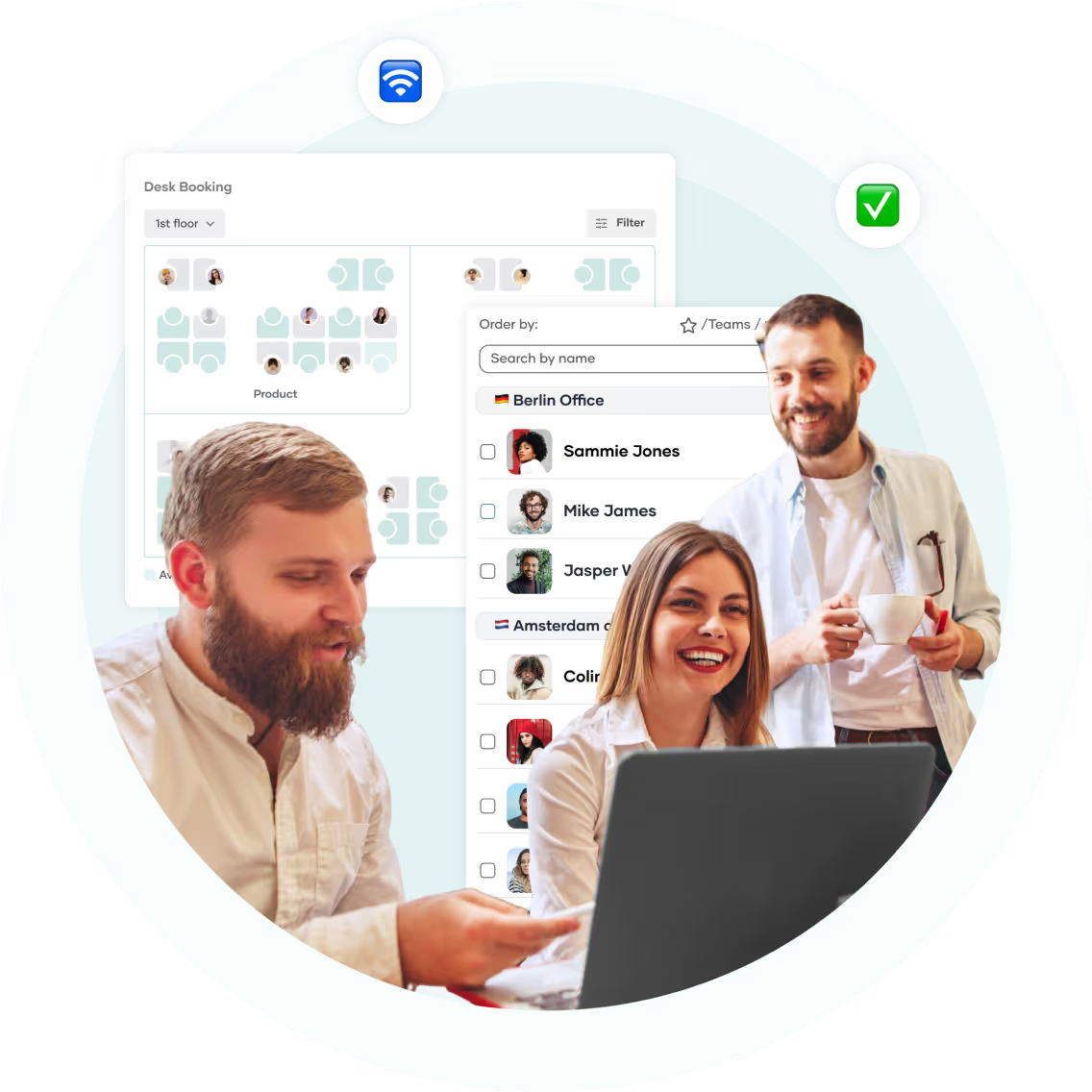
With the desk booking software PULT, your team can book workspaces, rooms and zones with a single click. Your employees can see directly which spaces are available, filter by equipment and see where their teammates are already sitting.
At the same time, you can evaluate the office usage data in Office Insights and see which rooms and zones are particularly popular and which ones you can remove or convert.
Guide: Understanding and implementing desk sharing rules
In order to realise the benefits of a desk sharing concept, rules are needed: for the introduction of desk sharing in the company, for the technical equipment and performance, and last but not least, for daily collaboration.
Desk sharing: Rules for introduction and daily collaboration
The most important points about desk sharing rules in brief:
Desk sharing requires clear rules for behaviour, organisation and technology.
The earlier all colleagues are involved, the more successful the acceptance of desk sharing rules and the cooperation of the team will be.
The desk sharing rules should be written down, communicated and easily accessible (e.g. on the intranet).
With PULT, desk sharing rules can be easily implemented thanks to desk bookings, automatic check-ins and utilisation analysis.
The rules are most effective when there is an open feedback culture and the guidelines are continuously developed.
What types of rules are needed for desk sharing?
In desk sharing, fixed desks give way to a system in which employees decide and book where they work on a daily basis. This requires a certain degree of coordination and rules.
Desk sharing affects various levels of everyday working life, each of which has its own requirements. The types of rules also differ accordingly:
Rules of conduct (etiquette): These concern immediate interaction in the workplace. They are about respect, consideration and adherence to common standards. Examples: do not leave rubbish or food leftovers behind, keep noise levels down, tidy away personal belongings at the end of the day.
Organisational rules: Who can work where and when? How are bookings made? Are there any restrictions? These questions need to be addressed in the form of guidelines and internal FAQs, or the answers should be stored in the booking system itself. Responsibilities such as technical problems also fall into this area.
Technical rules: Organised desk sharing is managed via software: booking tools, room occupancy displays or calendar integration. The systems themselves define rules about who has access, how far in advance bookings can be made, and whether a space is released again if the person does not show up.
Formal vs. informal rules: Some rules are not written down and develop over time as part of the culture or through habits within the team. Others, however, should be documented in order to create commitment and benefit the well-being of all.
The 9 most important rules for desk sharing
The following rules are suitable for posting in your office. They define the basic behaviour for using the workspaces.
1. Reservations only via the booking system Desks, rooms and zones can only be reserved via our booking system. Bookings can be made in advance, even days or weeks beforehand. Blocking spaces with bags or jackets is not permitted.
2. Leave your workspace as you would like to find it Clear your space after work. Only leave the fixed equipment on the table. Remove any food leftovers, wipe down the desk if necessary and make sure that the next person can start without any hassle.
3. Take your personal belongings with you every day Do not leave personal items behind permanently, even if you have already booked the same space for the next day. Use our lockers and storage compartments for storage. Find out more under Clean Desk.
4. Only occupy what you really need Adjust your booking to your usage and reserve exactly what you need for your work. However, avoid using larger desks or meeting rooms on your own. Others may need these spaces later. Use the space as efficiently as possible.
5. Do not hold meetings at the shared desk Telephone calls, video calls and group meetings should be held in designated rooms whenever possible. If you have no alternative, use headphones or keep your conversation brief. The open workspace is intended for concentrated work.
6. Respect the peace and quiet of others Do not talk across several desks, avoid loud noises or long phone calls. If you want to discuss something with your team, change location or speak quietly.
7. Hygiene is everyone's responsibility Use our hygiene stations, where you will find disinfectant spray and wipes. Wipe down your desk and chair armrests as needed.
8. Stay at home if you are ill If you feel ill, work from home or call in sick. We respect the health of our colleagues and want to avoid infection as much as possible.
9. Address rule violations fairly If you notice that colleagues are repeatedly ignoring the rules, address it. If this is not possible or is met with resistance, bring it up in the team meeting, talk to us or send us an anonymous message.
What needs to be regulated before introducing desk sharing?
Desk sharing changes daily routines, the functions and use of rooms, and the understanding of roles within the team. Therefore, it is important to introduce the concept in a well-thought-out manner. This begins with clear rules and responsibilities.
Communicating the introduction of desk sharing
Before you introduce desk sharing, your team should understand why the concept is being introduced and what benefits it promises. Communicate openly and objectively to manage expectations and address any uncertainties that arise immediately.
Involve your team in the rules for the new working model at a very early stage. Use question and answer sessions and provide opportunities for feedback. You should signal that you are open to concerns and reservations at any time and that you take them seriously.
Create the right conditions
How many places are available?
Are there any restrictions, such as fixed team zones?
Will work be done with or without booking?
Are there special arrangements for certain roles or on certain days?
Document these points and make them available internally. This can be done on the intranet, in the onboarding area or as a notice in the office.
Assign responsibilities
Determine who is responsible for the booking system and who can be contacted if rules are not followed. Also determine who is responsible for ensuring compliance with the rules and who should check compliance regularly.
Unspoken desk sharing rules: etiquette
Interpersonal etiquette complements the formal rules with what is often tacitly expected in everyday working life: consideration, attentiveness and a feel for the situation. This is particularly important in desk sharing because personal routines and working methods take place in shared spaces. Minor tensions can disrupt the flow of work.
Etiquette refers to polite, functional behaviour in a shared space. In other words, behaviour that is in line with the desk sharing concept and the working methods of colleagues.
Ask questions instead of interpreting If you want to use a space that may already look occupied, for example by a jacket or a notebook, talk to the person instead of simply moving things aside. Especially in open-plan workspaces, communication is often a better solution than interpretation.
Tip: In PULT, the reservation status and usage of all workspaces are immediately visible. A glance at the office plan makes it immediately clear which spaces are actually occupied or free.
Avoid territorial behaviour Desk pads, lamps or personal coffee cups almost act as a territorial claim. If desk sharing is really a consistent concept in your workplace, then the rule is: everyone adheres to the posted rules and stores personal items in a locker at the end of the working day.
Be considerate with noise You cannot and should not avoid all noise, but you can be considerate. Only listen to music and voice messages through headphones. Limit the length of phone calls or move to other areas for longer conversations.
Do not reconfigure devices and technology After you have finished work, your workspace should be returned to its neutral state. This applies, for example, to the position of the monitor and chair.
Reduce sources of scent and noise Strong perfume, loud chewing gum or opening food with a strong smell can disturb others. However, many people are too polite to mention it. Therefore, be sensitive about this yourself.
Respect silent signals If someone is sitting with noise-cancelling headphones, has their screen tilted significantly to the side, is wearing a hood or is otherwise visibly isolating themselves, this is a silent but clear signal. You should only approach these colleagues with matters that cannot wait.
Desk sharing rules for booking software
Booking systems for desk sharing set rules that are not always documented separately but directly influence everyday office life. They determine when a workspace can be reserved, how long a booking is valid, what happens in case of no-shows, and who has which rights in the system.
If these rules for desk sharing software have consequences for employees or collaboration, you should disclose them to your team.
Booking requirements and deadlines In some booking systems, you have to book your space in advance, while in others you can check in spontaneously. It is important that everyone knows when bookings can be made, how far in advance reservations are possible, and whether certain days or times are blocked. Cancellation deadlines also play a role: if you cancel too late, you may be blocking a space that others could have used.
Tip: In PULT, you can book your workspace in advance or check in when you enter the office. With PULT Presence, this is even done completely automatically.
No-show rules Automatic release is a useful feature in the software: if someone does not take their booked space within a specified time window, the space is released again for all colleagues.
Rights and roles In good booking software, booking rights can be distributed differently. Some users are only allowed to make reservations for themselves, while others, such as team leaders or assistants, can also book spaces for colleagues. Workspaces or zones can also be reserved for specific groups. You should communicate these role and access structures openly to your team.
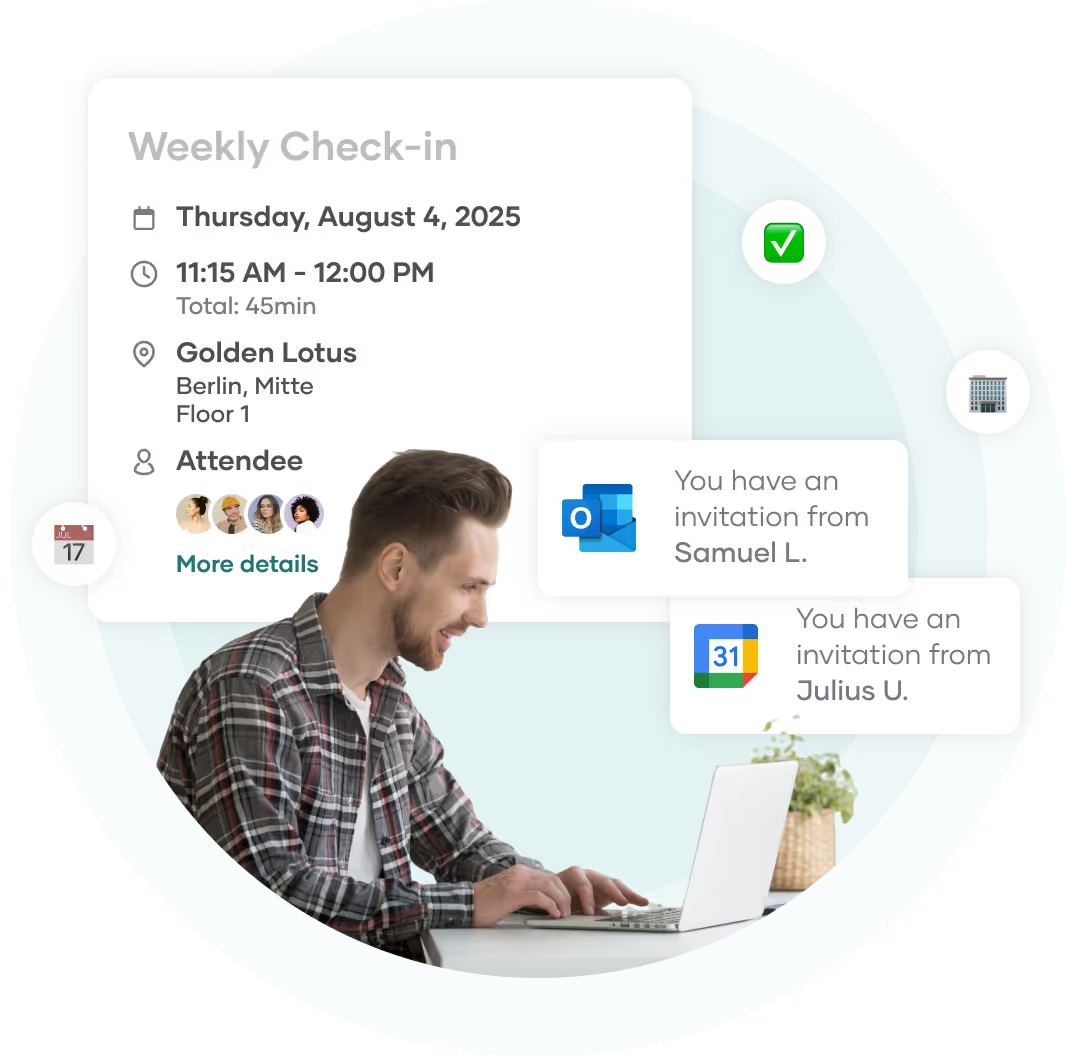
Integration into calendar and communication PULT can be linked to Outlook, Google Calendar or MS Teams. This means that desk bookings are displayed directly in the calendar or can be adjusted with a single click.
Data protection and tracking The PULT booking software allows you to evaluate office usage and utilisation and shows permanently booked and rarely used workspaces. However, in order to remain GDPR-compliant, no conclusions about the booking behaviour and attendance of individual employees may be drawn from this data.
Put desk sharing rules in writing: template for your company
If you introduce desk sharing in your company, you should put the most important rules in writing. This gives your team the necessary guidance and helps them to use the system reliably in everyday life.
Above all, rules on booking, use, consideration in everyday life, technology, check-ins and exceptions should be recorded, i.e. all points that could lead to misunderstandings in everyday working life. Depending on your organisation, you can design the rules as a short overview on the intranet, as a notice or as part of an internal desk sharing policy.
Booking: Workspaces must be booked in advance via PULT. Last-minute changes are possible as long as spaces are available.
Use: Workstations must be completely cleared after use. Personal belongings may not be left behind permanently.
Conduct: Conversations should be held at a normal volume; no phone calls without a headset. Please be considerate of colleagues who are concentrating on their work.
Technology: Monitors, docking stations and accessories may be shared, but must not be permanently moved.
Check-in: The workstation is considered occupied once you have checked in. Unused reservations will be released after 20 minutes.
Absence: In the event of illness, holiday or remote working days, the booking should be cancelled in good time.
Support: For technical questions or booking problems, please contact [name or function]. Feedback on usage is welcome.
{{cta}}
What typical problems can be solved by desk sharing rules?
Clear desk sharing rules prevent the typical problems that repeatedly arise with desk sharing: blocked spaces, disruptive noise in the workplace or misunderstandings when booking.
If you identify common problems early on and address them in a targeted manner, you will create the conditions for desk sharing to work in everyday working life. The following examples show which situations are particularly likely to cause dissatisfaction and how you can counteract them with simple rules.
Problem 1: Spaces are kept occupied without anyone being there Solution 1: Introduce binding bookings with clear check-in times. If you use a system with automatic release in case of no-shows (e.g. after 20 minutes), make this explicit. This will prevent seats from being blocked but left unoccupied.
Problem 2: Personal belongings are left at the workplace permanently Solution 2: Specify that all workspaces must be cleared at the end of the day and provide personal storage facilities (lockers, boxes) at the same time.
Problem 3: Disturbances caused by phone calls or conversations Solution 3: Make it clear that shared desks are primarily intended for quiet work. For longer phone calls or consultations, quiet rooms or other areas should be provided and used.
Problem 4: Frustration over workstations that cannot be found Solution 4: Clarify how many spaces are available and how they can be booked. Use the real-time display in PULT and define responsibilities for questions or problems.
Problem 5: Unequal treatment or informal special rules Solution 5: Ensure that all rules apply equally to everyone, regardless of position or team affiliation. If there are exceptions, for example for graphic designers or video editors with specific hardware requirements, document them in a comprehensible manner.
How do I enforce desk sharing rules?
Desk sharing rules are best established through role modelling, open communication in both directions and comprehensible processes for the entire team. If your team understands why certain rules apply and how they can be applied in everyday life, commitment will develop without the need for constant monitoring.
Orientation: Give your team clear guidance on what is expected, what rules apply and what behaviour is desired.
Address violations: Address any violations immediately. Remain direct and objective. Explain the behaviour and point out the applicable rules.
Feedback and further development: The rules must fit in with everyday life. Therefore, regularly seek feedback from the team and adjust the rules where something proves to be impractical or ambiguous.
Distribute responsibility: If desk sharing is organised in larger teams or across multiple locations, appoint designated contact persons. They can clarify questions, point out rule violations or collect feedback.
Compliance with desk sharing rules with PULT
PULT is a desk booking software that helps you implement your desk sharing rules. You and your team can use the software to book your desks, meeting rooms and zones. At the same time, you have access to the following functions:
Define booking rights & restrictions With PULT, you can specify exactly who is allowed to book what: you can make certain desks or areas, such as team zones, available only to specific users or teams. This can be done on a daily basis and apply to departments or roles that you specify.
Booking duration & advance booking PULT allows you to define booking periods in advance, for example, how far in advance reservations can be made. Resources (seats, rooms, zones) can also be blocked for a period of time, for example, if renovation or cleaning work is scheduled.
Clear rules for the team The dashboard shows your colleagues which rules apply: who is allowed to book, which spaces are blocked and after how long approvals are granted.
Automatic check-in & no-show rule The automatic check-in function via your existing Wi-Fi using PULT Presence ensures that booked spaces are automatically occupied or released again after a defined period of time if users do not show up.
Feedback & usage evaluation With PULT Office Insights, you can analyse the usage of your office, sorted by team, area and time slot. There is also the option of collecting feedback from the team to gauge the effectiveness of the rules or satisfaction with desk sharing.
Workplace management organises spaces, technology and processes so employees can work efficiently and feel motivated. This improves satisfaction, productivity and collaboration.
Understanding workplace management and implementing it correctly
Workplaces are changing due to new expectations in terms of collaboration, performance and work culture. Well thought-out workplace management is needed to ensure that offices, spaces and structures meet these requirements. In this article, you will find out what workplace management is all about, what challenges typically arise and how you can develop suitable solutions.
What is workplace management?
Workplace management describes the concept of organising and designing workplaces so that employees can work happily and efficiently.
Workplace management deals with the planning, organisation and optimisation of workplaces. However, it is also about processes on a daily basis as well as communication and the well-being of employees.
What is the purpose of workplace management?
The purpose of active workplace management is to design and organise workplaces and offices in such a way that employees can actually work there efficiently, healthily and with motivation on a daily basis. It therefore aims to improve the general quality of work, collaboration and utilisation of resources, both at an individual level and throughout the entire company. This involves systematically coordinating spaces, technology and organisation.
How does workplace management improve productivity?
Workplace management aims to create structures that have a positive impact on the flow of work:
clearly regulated responsibilities
well-coordinated space planning
a functioning technical infrastructure
This reduces idle time, duplication of work and interruptions to concentration in everyday working life.
How does workplace management contribute to employee satisfaction?
A well-organised working environment takes into account human needs such as retreats, comfortable furniture or family-friendly working models. People who feel comfortable are more motivated to work and are more likely to remain loyal to the company. Workplace management makes it possible to combine different requirements, for example from different generations or working styles, under one roof.
What role does workplace management play in space utilisation and cost control?
Targeted planning, for example when using desk sharing or repurposing space, allows space requirements to be adjusted without compromising on working comfort. Particularly in the case of hybrid working models, workplace management helps to avoid vacancies at workstations and thus utilise the available resources efficiently.
What are the basics of functioning workplace management?
Functioning workplace management is always based on a clear understanding of how people actually work and what they need to do so. It's about organising spaces, processes and equipment in such a way that everyday working life functions well. This also includes regularly checking whether something needs to be adapted, for example because the team has changed or new forms of work have been added.
Why is clear planning of space and workstations so important?
Good planning ensures that the available space is used sensibly and that nobody has to search or improvise. It also helps to anticipate days with high utilisation and either reduce this peak utilisation or deal with it skilfully.
Tip: Many companies use PULT Office Insights for their office analyses. This shows you the office utilisation over time and allows you to skilfully manage the available space. This means your employees can reliably find a free workstation even at peak times.
What role does technical equipment play in workplace management?
The right technology and reliable software ensure that your team can work and collaborate smoothly. The equipment includes a functioning and stable WLAN, suitable software, charging and presentation options, but also basics such as functioning monitors and headsets.
How do you implement workplace management correctly?
Active workplace management is primarily needed and used when a new workplace is planned or implemented, when better utilisation of space is desired or a switch to hybrid working is imminent. Even without these points, it should be regularly reviewed how workplaces can be further improved.
Procedure for new builds, relocation or completely new planning
Needs analysis: Who works how and where? Times, work locations, daily routines, role in the team, technology used, rooms, etc.
Create personas or utilisation scenarios: Visualise typical working methods and processes and check whether all colleagues are reflected in these personas.
Design space and utilisation concepts: Zones (quiet zone, zone for collaboration, break areas, ...), room types, occupancy and release for individual employees or specific teams.
Tip: In PULT, you can release or block meeting rooms, workstations or zones for specific employees and teams. This allows you to control utilisation in a targeted manner and enable those colleagues who really need it to use it.
Procedure for optimising existing office structures
Record the current situation: e.g. with occupancy data, usage observations or short interviews
Identify pain points: Where do work processes often get stuck? Which rooms are missing or inadequately equipped? Is certain technology missing?
Communicate the results: What did the evaluation reveal? What steps are now planned? What feedback is there on this planning?
Procedure for the introduction or further development of hybrid working models (home office, mobile working)
Analyse working patterns: When are how many colleagues in the office?
Draw conclusions: How many workstations are actually needed?
Develop zone and booking concepts: Desk sharing, areas for quiet and concentrated work, zones for collaboration, break areas, meeting rooms, guest areas.
Create the technical basis: Comprehensive WLAN, equally equipped workstations with monitors and docking stations, access to systems even from home, personal devices such as mouse, keyboard and headset.
What problems arise if there is no good or active workplace management?
If no one really takes care of the design and organisation of workplaces, many things don't work as they should on a day-to-day basis: sometimes employees don't know where they are supposed to work (this applies to unorganised sharing models), there is a lack of suitable rooms and technical equipment is not always where it is needed. These are operational brakes and, in the long term, the atmosphere in the team and the quality of work suffers as a result.
How does a lack of workplace management affect collaboration?
Without a functioning workplace management system, colleagues don't always know who is working where and how certain processes are running or what their current status is. This makes coordination within the team more difficult and meetings take longer due to many queries and details.
What does a lack of workplace management mean for the well-being of employees?
Unsuitable furniture, permanently poor air quality or a lack of retreat areas and concentration zones can lead to physical complaints, stress and concentration problems. If employees feel that their needs are being ignored, their motivation will understandably drop. Poor workplace design has a direct impact on mood and commitment.
What economic disadvantages arise for companies without active workplace management?
Companies that are noticeably disorganised struggle with inefficient use of space, high staff turnover and rising sickness rates. At the same time, a workplace that is unattractive in this way can weaken the employer brand, as well-qualified specialists tend to opt for modern and better-organised companies. A lack of planning also makes companies less adaptable, for example in the event of growth or crises.
How do I involve my employees in workplace management?
The best way is to regularly invite them to contribute their experiences and ideas. People know best what works well in their day-to-day work and where things are going wrong. When they realise that their feedback is taken seriously, their identification with the company increases and the quality of the workplace gradually improves.
What formats are suitable for dialogue with employees?
These can be simple things such as short surveys, feedback rounds after team meetings or targeted workshops on specific topics, such as the design of new rooms. Many well-organised companies also use software that allows employees to submit suggestions or evaluate changes.
Tip: Use the Personal Insights tool in PULT to obtain meaningful feedback on the well-being and wishes of your employees using quick surveys.
How do I deal with very different needs in the team?
The working styles and expectations of individual employees can differ greatly, for example between introverted lone workers and highly communicative extroverts, or between colleagues who prefer to work from home and those who prefer to be on site. It is therefore worth consciously seeking out different perspectives and seeing where compromises are possible.
What does it take for employees to really want to get involved?
Feedback should not only be collected, but also visibly implemented. Those who share ideas also want to see that something has come of them or that the idea has at least been recognised and considered. So communicate: What wishes and ideas have been received? What will be changed? What is not (yet) feasible and why? If this feedback channel works, the willingness to participate again next time will increase.
What are the advantages of involving employees in workplace management?
When employees have a say, it creates a better workplace and a sense of co-determination and responsibility. People feel that they are taken seriously and become more actively involved. This has a positive effect on the quality of solutions and teamwork.
When your employees realise that their own opinion counts, they identify more strongly with the workplace. This helps you to keep good people in the company.
What advantages does this have for the quality of workplace design?
Employees experience the workplace on a daily basis and very closely. They see details that managers or external planners overlook. Their feedback leads to practical and realistic solutions. In this way, workplaces and offices are created that really suit the team and your way of working.
Software for workplace management
If you want to organise workplaces well, you need to be able to deal with different locations, floors, colleagues working from home or mobile work and constantly evolving requirements. Without software, this endeavour quickly reaches its limits.
PULT helps you to understand the working behaviour of your teams, record their moods and wishes and provide them with an easy-to-understand tool with which they can book their workspace with binding effect.
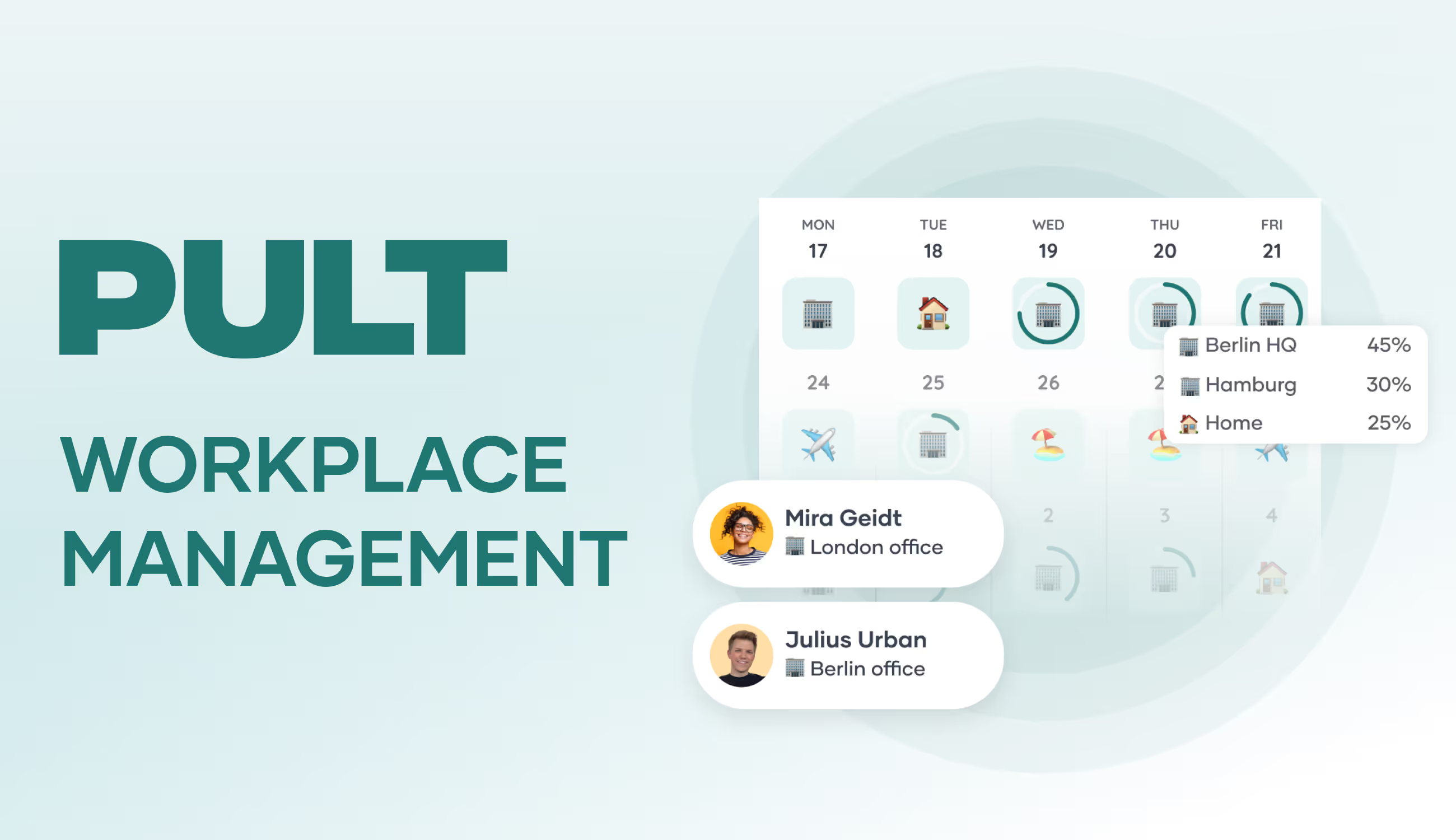
Record attendance and thus office utilisation. With PULT Presence, this can even be done automatically and without employee intervention.
Evaluation of office utilisation by office, floor and location
Desk booking with site plan, from smartphone, laptop, PC
Room reservation for meetings, workshops or focus work
Team find function to see who is in the office and when
Obtain feedback and employee sentiment.
Integration into existing tools such as Microsoft Teams or Slack

.png)
.png)




.avif)
.avif)